My Brother’s A Genius at Sheffield Theatres’ Tanya Moiseiwitsch Playhouse – review
Debris Stevenson’s new piece, featuring a Grime soundtrack, runs until 14 February
 |
Sheffield
|
|
Sheffield
|
2 February 2026
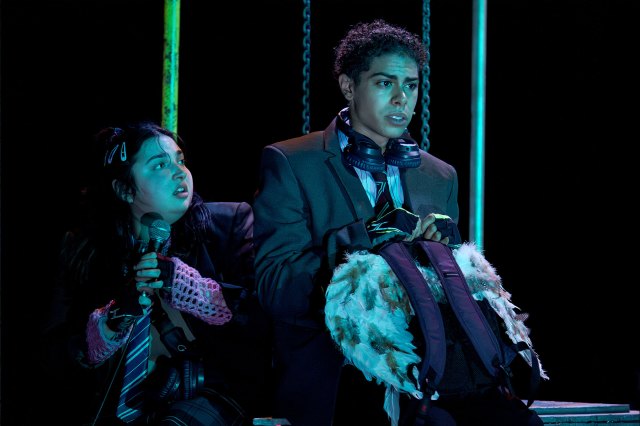
Debris Stevenson follows her West End-bound co-adaptation of Cyrano de Bergerac with a new play inspired, in part, by her genius brother and created through conversations with hundreds of young people. As a playwright, Grime-poet, multidisciplinary artist, neurodivergent academic and professional raver, Stevenson couldn’t be more qualified to filter those insights into a performance piece that combines poetry, dance and Grime – à la her 2018 hit, Poet in da Corner.
We follow neurodivergent twins, Daisy (Jess Senanayake) and Luke (Tyrese Walters), as they grow up together on a London high-rise council estate. They’re about to make the move to “big school” when their parents break the news that academically exceptional Luke has been offered a place at a leading school. Without the support of her brother, Daisy is sent spiralling.
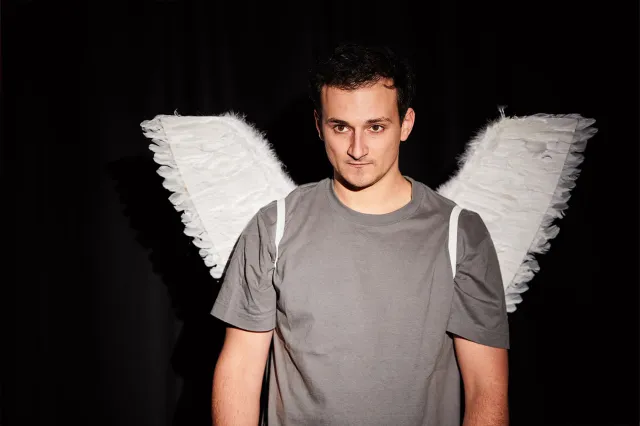
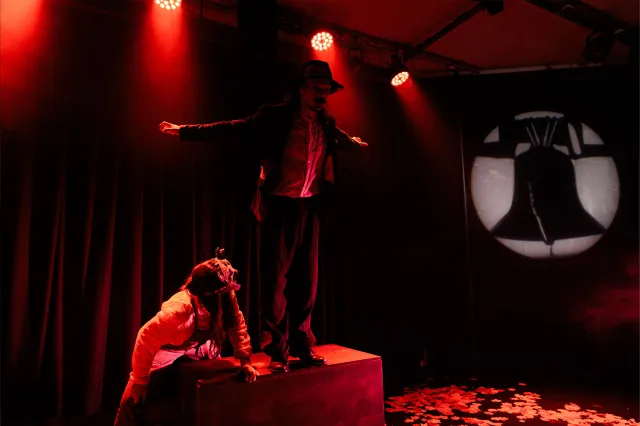
Erin Guan’s set design centres the action on a small circular platform with a playground climbing frame that resembles a birdcage. The twins stand on their 12th-floor balcony, gazing out at the world and the uninterrupted sky, and, like caged birds, dream of flying.
The co-production from Sheffield Theatres, Theatre Centre and National Youth Theatre puts accessibility front and centre. There are access resources available, including ear defenders, earplugs and a visual story guide, and every performance is played in a relaxed environment with audience members free to move around or leave and re-enter. We all receive a “pebble” – a small, meaningful gift to show care – in the form of a fidget toy to use during the show and take home.
The same care that has been put into presenting the show has clearly gone into Eleanor Manners’ production, and Daisy and Luke are thoughtfully presented as they navigate their unique worlds. Senanayake and Walters have the challenging task of also embodying the cast of adults who only seem to make the twins’ lives harder. Our actors recite the adults’ lines in unison – a device that quickly loses its potency.
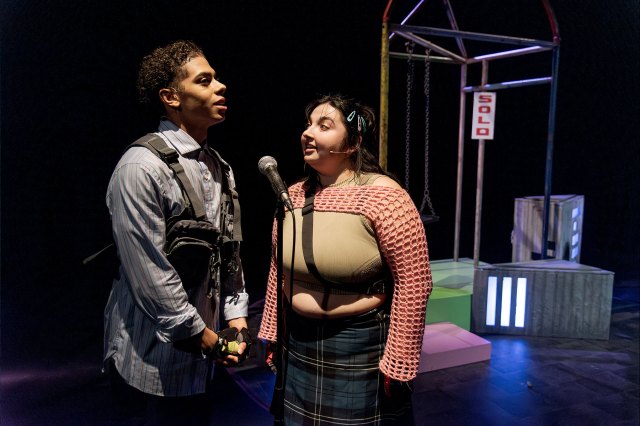
The constant rotation of characters and voiceovers could have proved confusing, particularly as there is little distinction in Senanayake and Walters’ dual delivery; however, Manners’ direction, in combination with Jammz’ sound design, gives us a clear sense of who we are dealing with.
Despite this, a bagginess sets in as the story progresses. “Title aside, everything in this show is fiction,” we’re told at the outset, and though we have been teed up to suspend our disbelief, events feel disjointed and increasingly implausible as we jump through their teenage years. Meanwhile, the musical numbers (words by Stevenson and compositions by Jammz) are too often formulaic, failing to serve the narrative.
Still, there’s a huge amount of heart in Stevenson’s text: in one touching moment, we see the twins’ mother struggling to deal with her own undiagnosed neurodivergence. And though we never fully get under the skin of the characters, it’s heartening to see these differing experiences of neurodiversity depicted on stage.
At the press performance, a large group of “big school” students sit in the upper tiers of the Playhouse, encircling the auditorium. They lap it up, whooping and cheering to a post-curtain musical reprise. It’s not a perfect production, but that engagement from the play’s target audience is endorsement enough.






source on Google