
Museum of Austerity at the Young Vic – review
The mixed reality installation, co-produced by ETT, Trial and Error Studio, and the National Theatre, runs in the Maria Theatre until 16 January
 |
London
|
|
London
|
11 December 2025
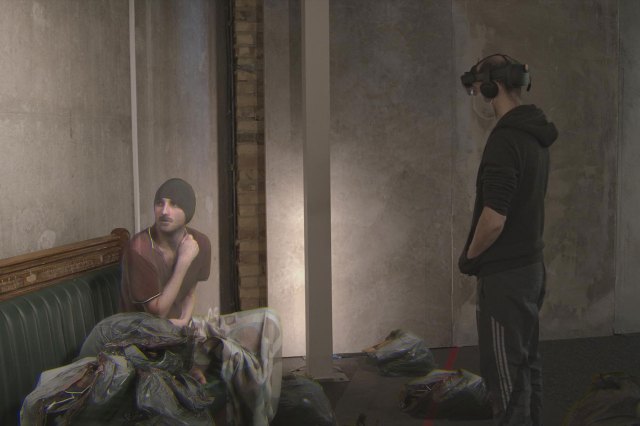
It feels perhaps a little absurd to assign a number of stars to a piece of work like Museum of Austerity. Not that other projects don’t tackle timely and distressing topics, but this 35-minute multi-reality experience, which is a co-production between the English Touring Theatre, Trial and Error Studio and the National Theatre, has a singular focus on real people who have lost their lives and dignity because of austerity policies.
It’s a confronting mixture of exhibition, theatre and testimony that has been cleverly and thoughtfully designed and executed to deliver its message. Edited by director Sacha Wares of Trial and Error Studio, alongside specialist advisor John Pring, the founder of Disability News Service, their respective expertise is clear. It combines effective theatre staging with profoundly moving real histories. It’s been mounted at several venues previously, but its tenure at the Young Vic marks its first return to London since it was nominated for the Best Digital Innovation at the UK Theatre Awards following its premiere at the 2021 London Film Festival.
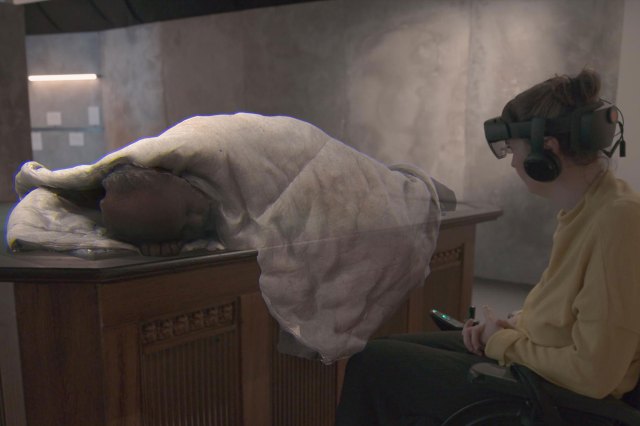
The piece begins with clear information about accessibility and content warnings, and the audio can be tailored to remove certain themes on request. Then, audiences are invited into what initially seems to be an empty museum space. A VR headset (that is easy to wear and worked without a hitch for me) illuminates a holographic gallery of frozen people. Portrayed by actors in eerie, shimmering digital form, they represent eight real men and women who died after being failed by the welfare system in a myriad of almost unfathomably cruel ways. They flicker into being as you approach, ghosts of their own stories.
A soundscape by Adrian Lee is the backdrop to the whole piece, but as you approach a figure, audio interviews with their real loved ones kick in, interspersed with the lofty tones of politicians such as Boris Johnson and David Cameron, braying and blustering about getting people back to work.
There is not enough time to hear the full testimonies of all eight people; you have to choose to either not hear everyone’s full story or not hear some at all. When your time is up, the figures and their stories fade away, and you are left with captions about the piece, which then turn into more captions than you could ever possibly read about others who have been similarly failed.
It’s a stark and angry piece of activist theatre. In a space that serves as a waiting room and a quiet moment to process afterwards, there is a timeline of austerity on the wall. It lays out in facts and figures and damning UN reports the politicians who are the architects and upholders of austerity, whose decisions and callousness are still wreaking untold harm. While arguably the people who most need to see this will not, there is no one who should feel they can look away.





source on Google
Related Articles
See all


Latest Reviews
See all





Latest Videos
Kimberly Akimbo musical releases UK premiere trailer
The five-time Tony Award-winning musical is currently on stage at Hampstead Theatre