
Equus at Menier Chocolate Factory – review
Lindsay Posner’s revival will also be staged at Theatre Royal Bath
 |
Bath | London
|
|
Bath | London
|
19 May 2026
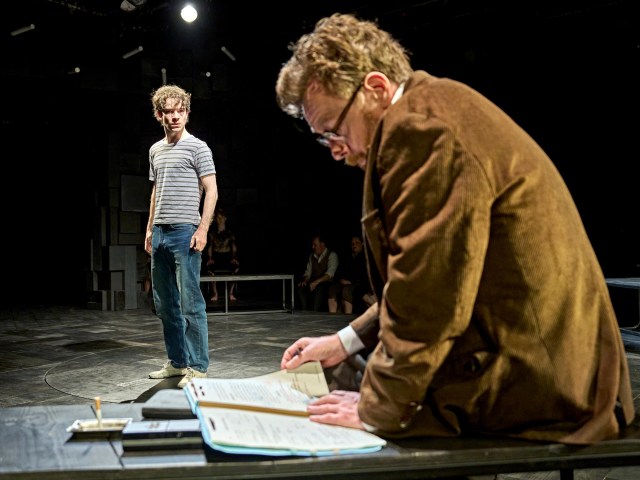
Peter Shaffer was inspired to write Equus by a headline in a local newspaper. A teenage boy had blinded six horses. That was all he knew – and he set out to imagine why such a shocking act might have been committed.
The resulting play starring Alec McCowen and Peter Firth was a sensation, igniting Shaffer’s already red-hot reputation, transferring to Broadway with Anthony Hopkins and becoming a film led by Richard Burton. More recently, a 2007 revival was a vehicle for Daniel Radcliffe at the height of his Harry Potter fame.
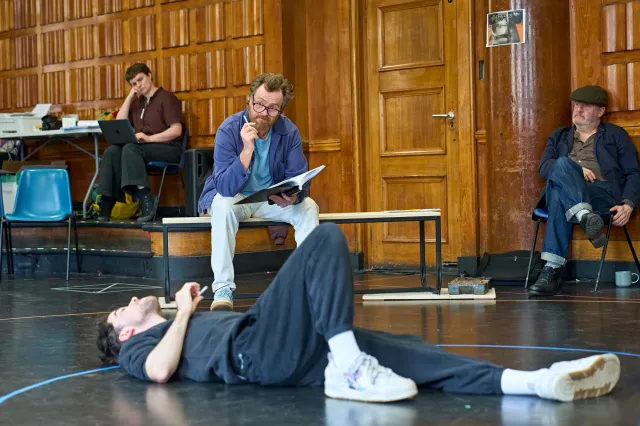
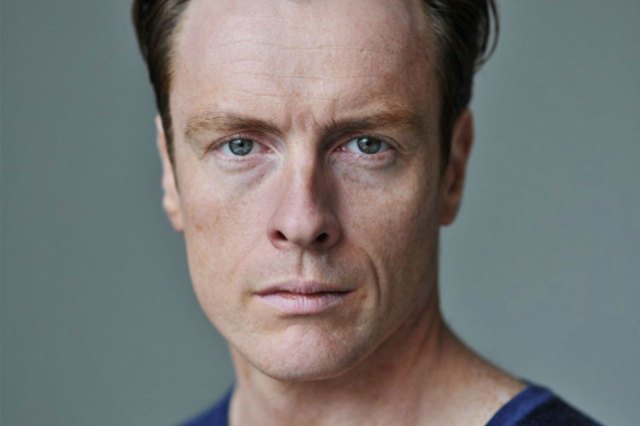
Lindsay Posner’s intense and intelligent production for the Menier is newly thoughtful and revealing, as it turns its focus on the conversations between Toby Stephens as Martin Dysart, the “overworked psychiatrist in a provincial hospital” who seeks to unravel the mystery, and a wiry and wired Noah Valentine as Alan Strang, the boy whose passion for horses has warped into horror.
The choreography by James Cousins magnificently embodies the horses in the form of six dancers, bodies smeared with black, who sit at the back of Paul Farnsworth’s stark arena of a set, watchful and still. When called into action, their bodies uncoil into the shapes of the animals, shoulders flexing, heads nuzzling and nudging, arms and legs shaped into an uncanny and communicative suggestion of movement. Sometimes they come together to convey the size and heft of the horses Alan will ride.
This approach, so different from the masked stylisation of the original production, emphasises the erotic as well as the religious obsessions that have transformed horses into an object of worship. It is at its most striking in the two great, revelatory conclusions to each act – one where a naked Alan climbs on his favourite horse Nugget (Ed Mitchell) and rides him, becoming like a centaur, absolutely at one in an act both sacred and profane; and finally at the close, where the whirring, muscular movement of panic and chaos is truly terrifying.
Paul Pyant lights both to extraordinary effect, highlighting boy and horse, casting warm spotlights on limbs, emphasising beauty, strength and terror in turn.
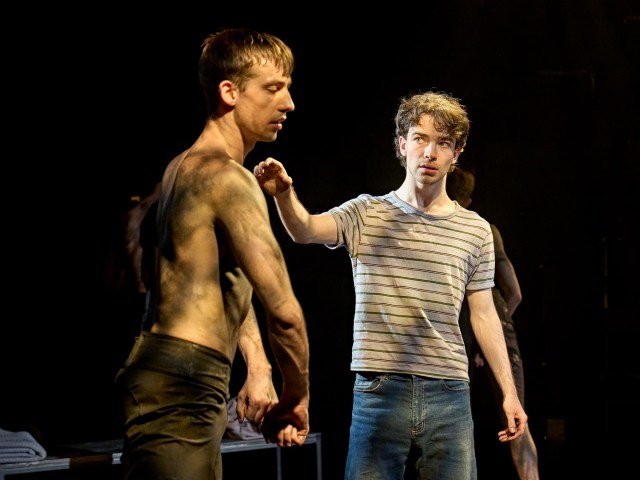
The play pivots on the idea that this alternate religion that Alan has created from a troubled home life, with a holy mother and an atheist father, and from his own confused erotic longings, is full of a passion that Dysart, married to a dentist – “Dr and Dr McBrisk” – longs for but can never feel. In “curing” Alan, in making him “normal” again, is Dysart effectively robbing him of something that makes him special? He won’t “gallop again”. His sense of the numinous will vanish.
Views of psychiatry have changed since 1973, but what hasn’t diminished is the poetic power with which Shaffer’s writing explores this sense of peering into the dark, of the conflicts and tension between the instinct of modern medicine to make things simple and the ancient, more “primitive” notion of accepting the unknown.
Both production and performances give this acknowledgement full scope. Stephens, almost unrecognisable behind thick-framed glasses and bushy beard, makes Dysart’s doubt a force for empathy rather than self-pity; he is fascinated by his patient for his own reasons, but he also desperately wants to reconcile the forces that are tearing both Alan and him apart. His great stillness, his emotional listening, contrasts with Valentine’s jumpiness as Alan, his constant twitching of loosely clenched fists.
It is an exceptional performance, both terrified and terrifying, a picture of a boy in pain and of one who has touched the transcendent. And it is backed by a supporting cast that includes Emma Cunniffe and Colin Mace, lending Alan’s parents nuance and tragedy of their own, and Bella Aubin, open-hearted and strong as Jill, the stable girl whose kindness precipitates tragedy.
Together, they allow Equus once again to cast its spell as an outstanding and gripping piece of storytelling, a great leap of theatrical imagination.






source on Google
Featured In This Story
Related Articles
See all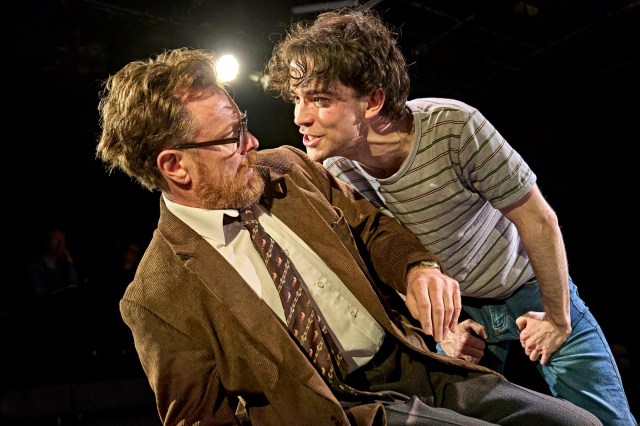
Latest Reviews
See all

Latest Videos
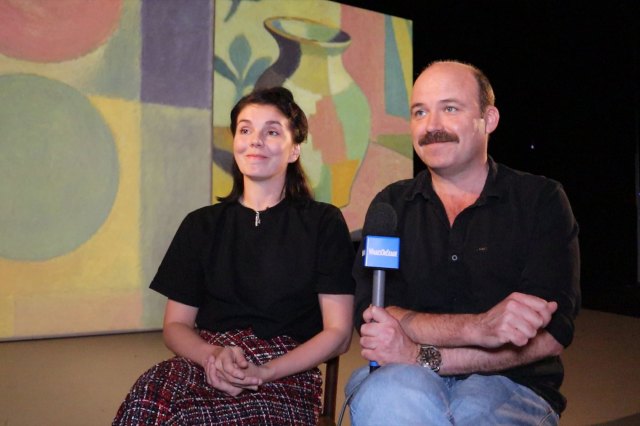
Rory Kinnear and Natalia Osipova on the meaning of a good life in James Graham’s The Standard of Living
The world premiere play celebrated its official opening last night!