
All My Sons West End review – Bryan Cranston in an explosive production
Ivo van Hove’s revival of the Arthur Miller classic runs until 7 March
 |
London
|
|
London
|
21 November 2025

Director Ivo van Hove has a way with an Arthur Miller play. He made his name in the UK with his stripped-back, atmospheric production of A View from the Bridge, which set Mark Strong on a smoky stage and let fireworks explode. He also has a way with Bryan Cranston. His direction of the Breaking Bad star in Network had a similarly explosive effect.
So the combination of Cranston and Miller in the latter’s All My Sons, about a seemingly respectable businessman whose flawed moral judgement has had fatal and unforgivable repercussions, was likely to be memorable. And it is. Yet it is what happens around Cranston’s crumbling paterfamilias Joe Keller that makes it so intense.
It opens with a scene that is normally only described: Marianne Jean-Baptiste’s haunted Kate Keller clinging to the apple tree planted for her missing pilot son Larry, as it topples to the ground in a storm. Jan Versweyveld’s set and lighting design are stark, brown, scuffed. This is not the usual suburban house but an expressionistic wasteland, with a great portal at its centre, where characters stand before appearing.
Other van Hove signatures are also on display, most notably the over-insistent music in Tom Gibbons’ sound design and snatches of songs between acts. But clear too is his remarkable ability to crank up tension, to pull the relationships in the Keller family to taut breaking point and to orchestrate the results.
Miller’s play starts off as a study of grief, centred on Kate’s refusal to accept Larry is dead and not simply missing. However, as it builds, it becomes something different: an agonising indictment of corruption and false gods as a narrative unfolds about cracked cylinder heads provided by Keller’s factory being responsible for the deaths of 21 fighter pilots in the Second World War.
The crisis is caused when Larry’s girl, Ann (Hayley Squires), who used to live next door, returns to the neighbourhood, determined to marry his brother Chris (Paapa Essiedu), who loves his parents and worships the ground his father walks on.
Van Hove focuses with laser-like intensity on the relationship between father and son. In the early scenes, when Joe seems like a popular, regular guy, Cranston has a vaguely rumpled quality, a sense of understanding everyone’s problems. He mock-wrestles with Essiedu as they confront one another over Chris’ plans; there is a palpable sense of affection between them. As the stage and the story darken, they square up face to face, locked in a combat that will undo them both.
Essiedu is simply superb, leaning into Chris’ essential goodness, his trust in a world that is about to be destroyed. He has a watchful gentleness, and Squires makes Ann’s need for him palpable. When her brother George (Tom Glynn-Carney, wired and impassioned) arrives, van Hove and Versweyveld change the lighting, so the focus is suddenly stark and cold, shining bright on the truth that is emerging, on the audience who are complicit.
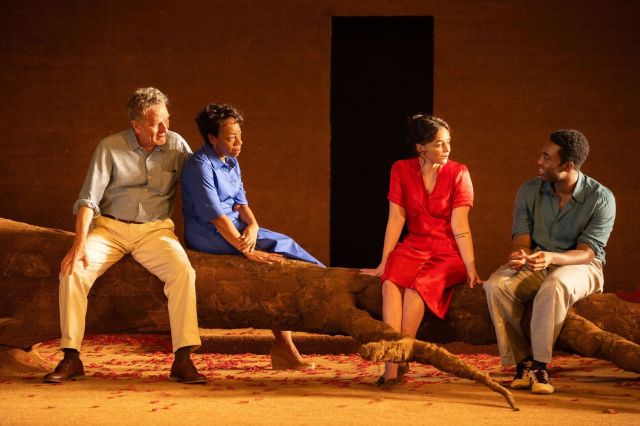
There’s a marvellous moment when, for an instant, it seems as if George too can be drawn back into the settled society that once enfolded him, and the lights change again as the mood lightens; then Joe lets slip a single, incriminating sentence and the moment is lost for good. Tragedy beckons.
Suddenly, Kate’s desperation to believe her son lives makes sense and in an utterly devastating performance of quiet despair and willed intent, Jean-Baptiste makes it absolutely clear why she has clung to her belief. Cranston crumples, unrecognisable from the suave figure who commanded his world just hours before.
The sense of lives dashed is overwhelming. Van Hove risks a great melodramatic gesture at the close, but his production doesn’t need it. It has demanded that attention must be paid from the very start.






Featured In This Story

Related Articles
See all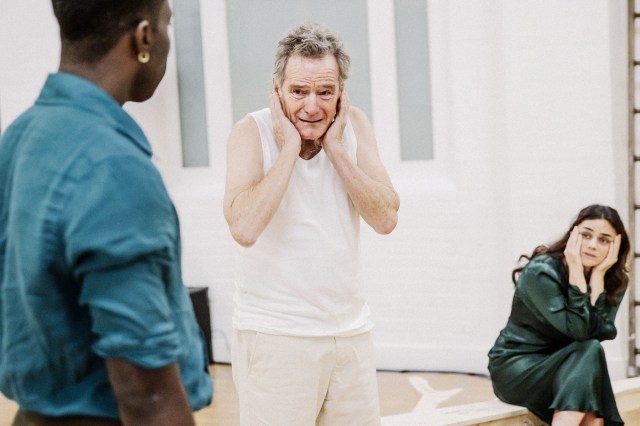

Latest Reviews
See all


Latest Videos
Rosamund Pike in Inter Alia – watch the West End opening night highlights
The National Theatre’s hit production follows in the footsteps of Prima Facie