
A History of Paper with Alan Cumming and Shirley Henderson – review
The musical, co-produced by at Pitlochry Festival Theatre and Dundee Rep Theatre, is directed by Andrew Panton
 |
Dundee | Pitlochry
|
|
Dundee | Pitlochry
|
17 August 2026

He could only keep us waiting for so long. Alan Cumming has been a presence behind the scenes since he took over as the artistic director of Pitlochry Festival Theatre but now, in A History of Paper, he finally comes into the limelight by playing a part in one of his shows.
And it’s worth the wait. Cumming has undeniable star quality when you see him on stage, a lifetime’s experience in showbiz coming through in all of his gestures, turns of phrase, even the pauses and silences between the lines. You feel you’re in the presence of an actor who really know what he’s doing and has the audience right where he wants them.
All of those skills come in especially useful in a show as understated and character-driven as A History of Paper. This is a joint production with Dundee Rep Theatre, but the musical was first seen at the Traverse Theatre in 2024 as part of the Edinburgh Festival Fringe, and Cumming loved it so much that he was determined to make it part of his first Pitlochry season, as well as being the first role he’d play there.
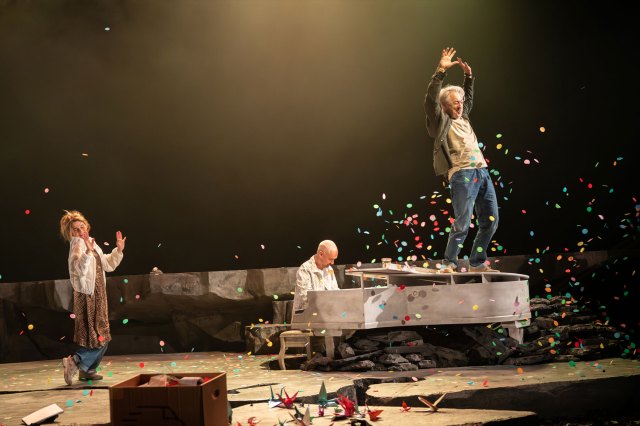
It was garlanded with praise in 2024, and it’s a marvellously simple idea; a love story about two characters who are known only as “He” and “She”, told through the various bits of paper left behind in their relationship. And it isn’t just love letters, ticket stubs or personal notes: all sorts of paper play a part in their story – origami, scrap, Chinese lanterns – and the cleverest thing about Oliver Emanuel’s script (Emanuel conceived the story as a radio play in 2016 before his death in 2023) is the way that it structures the play around those different items.
True, the denouement comes as a bit too much of a shock and, even though its papery link is well made, it appears somewhat out of the blue, leaving the final 15 minutes with the feeling that the ending is searching for a way to settle. However, it’s a gentle, beautiful story with some cracking lines that the cast bring to life beautifully.
Alongside Cumming, Shirley Henderson is just as good, a down-to-earth foil for his airbound romanticism, and their body language is beautifully observed, suggesting genuine tenderness between the two characters. Gareth Williams’ songs are warm, affectionate, and full of singable tunes so that they genuinely enrich the action. Andrew Panton’s direction is astute, and Ana Inés Jabares-Pita’s lavish designs give the show a real luxury quality, showing that it has come a long way from the shoestring days of the Edinburgh Fringe.
Hearteningly, this was the busiest I’ve seen the Pitlochry auditorium in a long time, which is a testament to the transformative impact of the “Cumming Effect”. If he’s managing to stage work of this quality that also packs in the crowds, then he’s well on the way to achieving his aims.
A History of Paper continues at Pitlochry Festival Theatre until 12 September, before heading to Dundee Rep from 16 to 19 September.






source on Google
Related Articles
See all





Latest Reviews
See all



Latest Videos
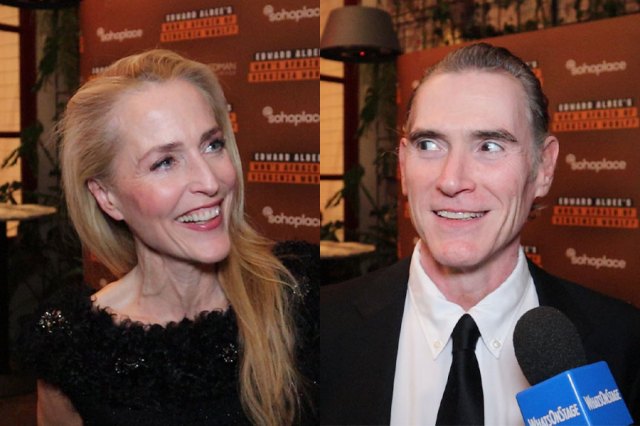
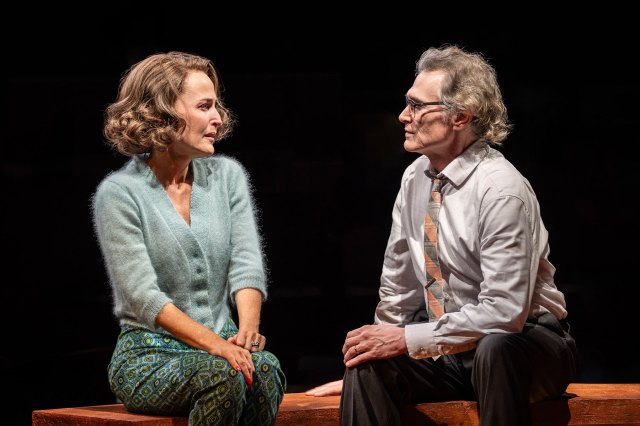
Gillian Anderson and Billy Crudup on staging a ‘boxing match’ in the round in Who’s Afraid of Virginia Woolf?
Marianne Elliott’s revival of the Edward Albee classic is running at London’s @sohoplace