
The Standard of Living with Rory Kinnear and Natalia Osipova in the West End – review
The world premiere of James Graham’s new play, directed by Nicholas Hytner, runs at Theatre Royal Haymarket until 12 December
 |
London
|
|
London
|
29 September 2026
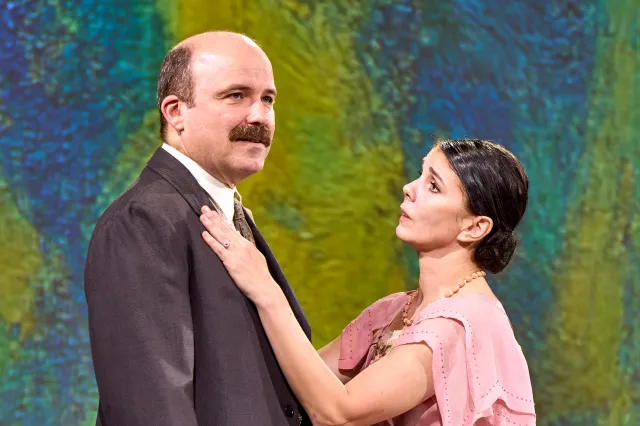
“What is a good life?” A man in a grey pinstripe suit steps urgently forward and asks the question, hands twitching in his pockets, face alive and intense. “And can that life, a life that is enriched and fulfilled, can it be quantified and measured; are there equations and formulas for that? Well, you might not think that, and reasonably so, but I am here today to tell you that I believe it can…”
This is the opening of James Graham’s new play about the economist John Maynard Keynes, a man who transformed the way governments thought about their economies through his belief in intervention in the free market – spending to stimulate growth. His theories shaped the post-Second World War consensus that created the NHS and the welfare state. But they fell out of fashion under Margaret Thatcher and were replaced by much tighter fiscal policies.
An argument about economic policy might sound like a dusty subject for drama. But Graham fills his vision of Keynes (a charismatic Rory Kinnear) with romance. It’s expressed not just in the love he found with the Russian ballerina Lydia Lopokova (played with instinctive comic timing and enormous charm by the real Russian ballerina Natalia Osipova), but also in the most breathtakingly romantic emotion of all: this is a play full of the bewitching power of hope.
In telling a story that stretches from the First World War (when Keynes is ignored about the punitive terms of the Treaty of Versailles) to the end of the Second (where he helps set up the International Monetary Fund and the World Bank), and encompasses both his rackety sex life (he was essentially homosexual until he married Lopokova) and his friendship with the tiresome Bloomsbury set (including Virginia Woolf and her sister Vanessa Bell), The Strandard of Living inevitably falls into some biographical clichés.
The dialogue is occasionally of the “Hello, Beveridge” and “Your book is the talk of the town, Lytton” variety; the second act has less dramatic momentum than the first; Bloomsbury’s interactions with Keynes are less interesting than his interventions in the world. He paid for their lifestyle, but they were never grateful and their self-absorption is historically tedious.
But by and large, Graham’s great achievement is to make the words jump up from the page, just as Osipova as Lopokova dances through the action, bringing colour and life to a monochrome world. He has a gift for making the past vital. The dialogue is often very funny, and Kinnear’s masterful performance is full of both passion and wry humour, with a gentle way of pausing just before he delivers a thought, or a put-down.
Under Nicholas Hytner’s controlled direction and with the help of James Cousins’ clever choreography, economics becomes positively sexy as Keynes dances a tango with his “laissez faire” adversary Fredrich Hayek. “Tighten your belt,” cries Hayek as they turn. “Buy a new belt,” suggests Keynes. As Hayek, Laurie Kynaston’s performance is a beautiful balance of charm and zealotry.
Bob Crowley’s set of sliding panels, animated by projections by Luke Halls and Bruno Poet’s lighting, keeps this sense of constant motion, as Keynes’ mind and life races between worlds. Black and white stills and grey stippled walls and blackboards contrast with the light and colour of the paintings of Bloomsbury by Duncan Grant (another finely calibrated performance by Thomas Flynn) or the Cézanne still life that Keynes purchases for the good of the nation. The grey men of the Treasury are just that in Jenny Bevan’s grey suits.
The quiet scenes land just as impressively as the more animated ones. The moments when Lopokova simply puts her head on Keynes’ shoulder as an expression of adoration, or the (true, astonishingly) encounter between Hayek and Keynes as they fire watch for bombs on the roof of King’s College Chapel, still arguing about economics, but full of respect for one another, are deeply moving.
Graham clearly loves and admires Keynes, and Kinnear creates an unforgettable portrait of a man who bestrode his times with a gentle modesty that belied his cleverness. But the play’s lesson for today isn’t only economic. The entire production is a plea for the value of beauty, of art, of dance, of lives that are full of something more than the day-to-day grind. That was Keynes’ greatest lesson: it is important to know how to live as well as how to spend. This is art about the importance of art and is both uplifting and hopeful.






source on Google
Featured In This Story

Related Articles
See all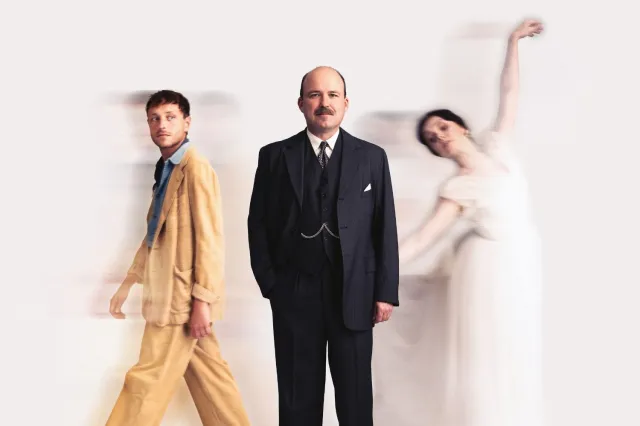


Latest Reviews
See all







Latest Videos

Michael Ball performs “Pure Imagination” from Charlie and the Chocolate Factory
What you’ll see will defy explanation!