
The Second Best School Shooting at Pleasance Courtyard – review
The worlds of social media, teenage angst and gun violence collide in this new play
 |
Edinburgh
|
|
Edinburgh
|
7 August 2026
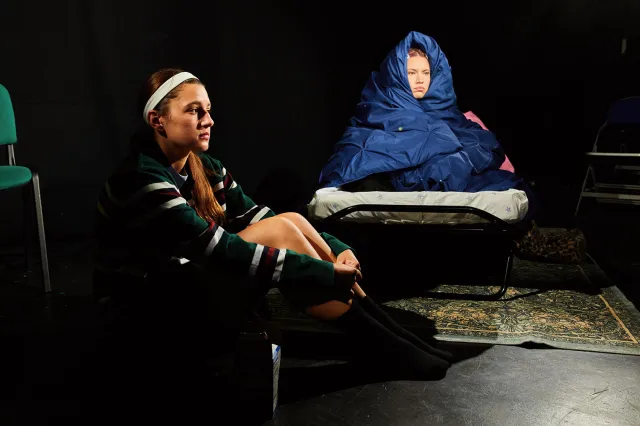
It begins with a gunshot.
From that startling opening, Second Best School Shooting – penned by former teacher Alice Stanley Jr. – explores the distorted realities beyond the ever-recurring headlines. Following two best friends processing the aftermath: Ava, a pink-haired, iconoclastic rebel-punk, and Parker, who is determined to graft her way through school. Their central dynamic, even with some small moments of uneven performance, feels authentic.
Set entirely within the single-room confines of schoolgirl Parker’s bedroom over a few tense days, its darkly comedic premise pivots on a stark contrast: in the same town where 15 people were killed in a tragic incident at a much wealthier, highly privileged school, a student at their own, less affluent institution fires a single shot into the ceiling. No one dies, but no one can deny such an experience may bring on trauma.
The play is at its most galvanising when examining how gun violence has become casually entwined with the modern American school experience, and how class dictates who gets remembered. In a world of viral tributes, conflicting political stances and social media posturing, the show offers a wry critique of the NRA, TikTok and so much more. It tricks us into laughing at something horrifying while cleverly forcing the audience to confront our own desensitisation.
During the show’s more polemic moments, where the dialogue tries to deliver sharp commentary, Ava and Parker lose some definition and feel less genuine. However, the play shines when critiquing how social media sanitises tragedy: the notion of quantifying trauma through Instagram likes or planning TikTok dance routines to compete for public sympathy is a novel, biting observation. The line “we’ve been training for this our whole lives”, a nod either to social media or the school shooting practice drills, proves particularly chilling.
Visually, the static bedroom setting feels a bit unexcitingly staged: slow lighting fades drain crucial momentum where punchy cuts to black would have maintained the dramatic tension. Fringe plays focussing on female friendship are always welcome, and this black comedy offers plenty of sharp, thought-provoking ideas. Yet, hampered by a clunky resolution and uneven pacing, it stops short of reaching its full potential.






source on Google
Guide

Latest Reviews
See all




Latest Videos
Rory Kinnear and Natalia Osipova on the meaning of a good life in James Graham’s The Standard of Living
The world premiere play celebrated its official opening last night!