
The Rat Trap at the Park Theatre – review
Bill Rosenfield’s reimagining of the Noël Coward classic runs until 14 March
 |
London
|
|
London
|
3 February 2026
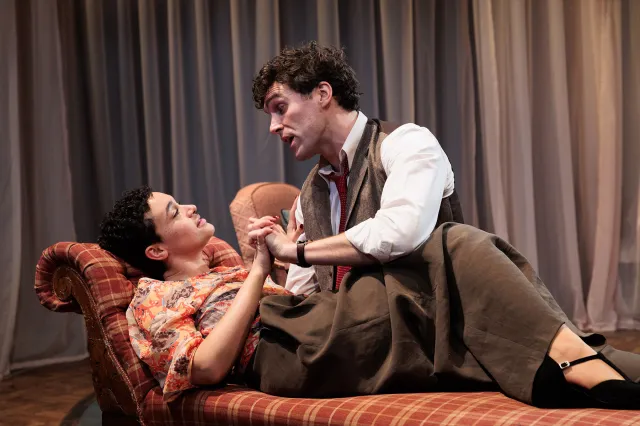
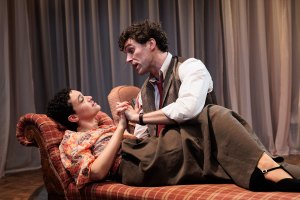
Set in 1920s Belgravia, Noël Coward’s first play examines marriage, ambition, and artistic rivalry through Sheila Brandreth (played by Lily Nichol), a talented novelist, and her husband Keld Maxwell (played by Ewan Miller), an aspiring playwright. On paper, it has all the makings of a sharp, unsettling study of ego and intimacy. In performance, however, this reimagining by Bill Rosenfield rarely rises above polite inertia.
Coward’s talent for dialogue is evident throughout. He understands how couples talk around the truth, how affection and resentment can sit uncomfortably in the same exchange. Miller’s Keld captures this well, leaning into the character’s self-importance and creative entitlement without tipping into caricature. Opposite him, Nichol brings intelligence and restraint to Sheila, grounding the role with emotional clarity and a quiet dignity that does much of the heavy lifting. There are flashes where Coward’s wit genuinely sparkles, but they remain frustratingly untethered from a narrative that never quite knows where it is going.
From fairly early on, the tension settles into a low, constant hum, but never escalates. Scenes unfold, conversations recur, and yet the emotional temperature remains stubbornly lukewarm. Despite capable contributions from Daniel Abbott as Edmund Crowe, Gina Bramhill as Olive Lloyd-Kennedy, Zoe Goriely as Ruby Raymond, and Ailsa Joy as Naomi Frith-Bassington, the story circles its themes rather than deepening them. You begin to suspect that nothing particularly consequential is going to happen. That suspicion is not misplaced.
Without spoiling too much, the ending lands with a thud rather than a sting. After extensive handwringing about the horrors of parenthood, the final reveal feels less like a provocative turn and more like an unimaginative shrug. For a play so preoccupied with ambition, betrayal, and dissatisfaction, it is curiously uninterested in dramatic consequence. Coward spends much of the evening warning us of something dreadful, only to deliver the theatrical equivalent of a damp sparkler.
The production choices do little to enliven proceedings. Libby Watson’s set and costume design gestures vaguely towards the 1920s, but in a way that feels more “mood board” than period specificity. Everything looks serviceable, but nothing looks considered. Audible curtain scrapes during scene changes repeatedly pull focus away from the action, making it hard to remain immersed when the mechanics of the staging announce themselves so loudly.
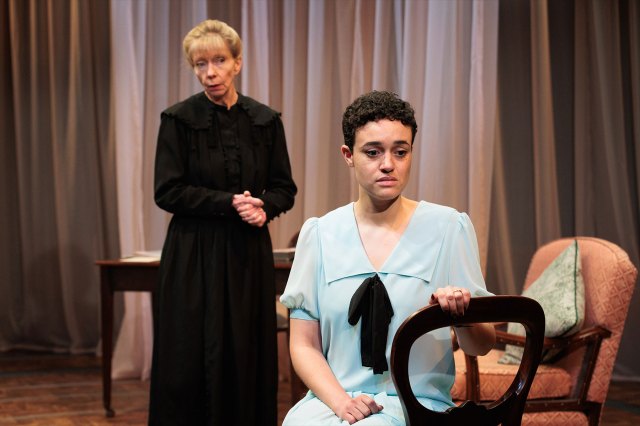
One of the production’s more successful additions is Burrage, the long-suffering housemaid, played with dry wit by Angela Sims. Burrage’s complete lack of interest in male authority and her allegiance to the women of the house provide a rare moment of levity and a quietly subversive humour that lands far more effectively than much of the surrounding drama.
And this is ultimately the problem. Individually, the ingredients are strong. The cast are uniformly good, yet somehow, the elements never cohere.
This is a play with literary promise and moments of verbal sparkle, but one that feels dramatically inert in execution. Despite Coward’s perceptive eye for relationships, the production never builds enough momentum or emotional weight to justify its runtime. What should feel like a cutting portrait of a creative marriage instead drifts by, leaving you not devastated, shocked, or enlightened, but simply wondering when it might finally begin.






Featured In This Story
Related Articles
See all

Latest Reviews
See all




Latest Videos
Once on This Island West End concert – watch performances in rehearsals
Check out the cast in action ahead of Sunday’s big night