
Headlong’s Robota: A Creation Story for the End of Time at the Schwarzman Centre – review
Roy Alexander Weise’s production marks the first full-scale theatre show in the new venue within Oxford University
 |
Oxford
|
|
Oxford
|
9 July 2026
Karel Čapek’s 1920 sci-fi hit RUR. is the original robot vs human text. It inspired Metropolis, Blade Runner and Terminator. Basically, anywhere you see a plot featuring androids masquerading as humans, RUR lurks in the background. It even invented the word “robot”.
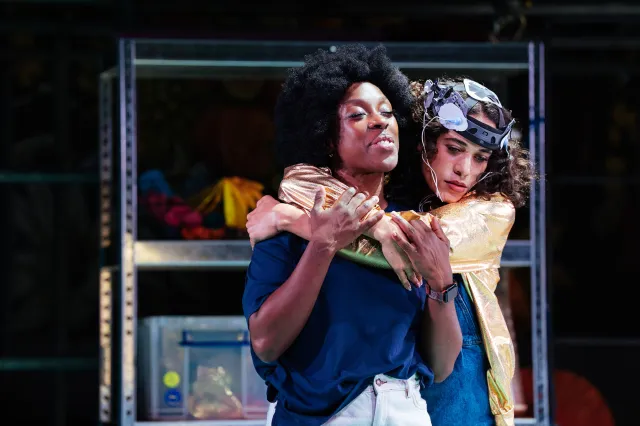
So it’s a great choice for the inaugural play at Oxford’s new Schwarzman Centre, which also houses the university’s Institute for AI Ethics. In Headlong’s chilling reimagining, Robota by Ella Road, the communist symbolism of Čapek’s original becomes a debate about the potential dangers of artificial intelligence. The robots gain not just sentience but emotion, reproductive powers, and – most disturbingly – free will. It’s Pinocchio without a conscience.
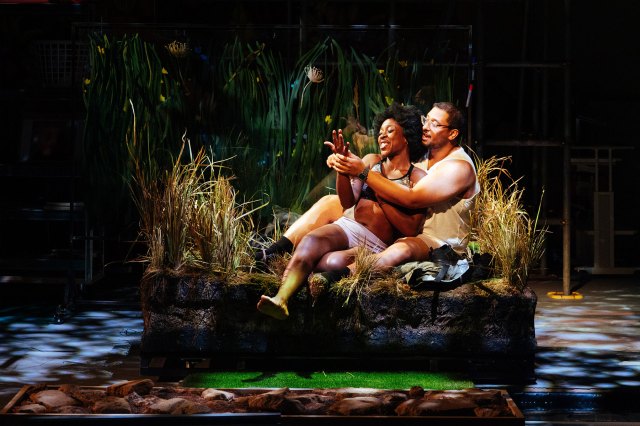
The brand-new Schwarzman Theatre itself is a triumph, transitioning effortlessly from lecture hall to performance space. Designer Loren Elstein treats it as a theatrical toybox, with trapdoors, pools of water, scaffolding walls, and balconies manned by robotic guards. It feels like an experimental sandbox – as it should, because we are told at the very start that what we are about to see is a test: a test that seems to go very, very wrong, with global apocalypse a distinct possibility.
On a remote island, a bunch of tech-bros are playing God. They’ve perfected the creation of artificial humans, and they’re selling them by the million to the rest of the world. The RURs will draft memos, man the factories, and give their owners unstinting sexual relief, all with the same cheery smile. What could possibly go wrong? Into this male-skewed vision of paradise comes activist Helen (Ronkẹ Adékọluẹ́jọ́), a fighter for “Robot Rights”. And once she arrives, things start to unravel.
Warnings about robots taking over are a well-trodden field. From Fritz Lang’s Maschinenmensch to Rutger Hauer on the shoulder of Orion, sci-fi has been stuffed with malevolent machinery for years. What makes Robota special is not the basic idea of mankind reaping its own destruction through technology, but just how close and believable that outcome now truly seems. The way the robots speak on stage is instantly recognisable to anyone who has conversed with ChatGPT, capturing that uncanny-valley tone of pure, harvested intelligence.
In the first half, Robota does get slightly bogged down by its own philosophical debates. There are long discussions about robots having rights because they seem to be human – an argument which feels both dated and unconvincing. On top of that, such is the speed of real-world AI developments that some parts of Robota seem already obsolete. We don’t need to “install emotion modules” to teach AIs the meaning of love. We can ask Claude about it right now, and get an answer that’s more profound and meaningful than anything most humans could manage. As a result, there’s a naivety to Robota which belies its cutting-edge credentials. For a play about such a deep subject, it’s initially surprisingly shallow.
But this all changes in the second half, when the plot, like the AIs, really takes over. Enthralled by Helen and her crusade, scientist Ali (Irfan Shamji) creates a robot version of her, Helly, played by Umi Myers with a terrifying combination of machine logic and teenage passion. Who is the real Helen, and who the robot? And why should being “real” give you any more right to joy and life? What began as The Island of Dr Moreau mutates into AI Love Island as human and clone compete for supremacy. There can be only one victor.
Despite its slightly scattergun satire, ultimately Robota emerges as a thrilling adventure, a brilliant introduction to a great new theatre, and a genuine springboard for discussion. A couple of miles from the Schwarzman, at the Oxford Science Park, they’re developing “autonomous labs” capable of creating artificial life at the molecular level. How much control do humans have over that autonomy? Are we living in an age where science fiction and lived experience finally collide with devastating results? How can we know what’s genuine and what’s artificial? We can’t know. And maybe that blessed ignorance is the one thing that keeps us human.






source on Google
Featured In This Story
Related Articles
See all

Related City Guide

Latest Reviews
See all



Latest Videos
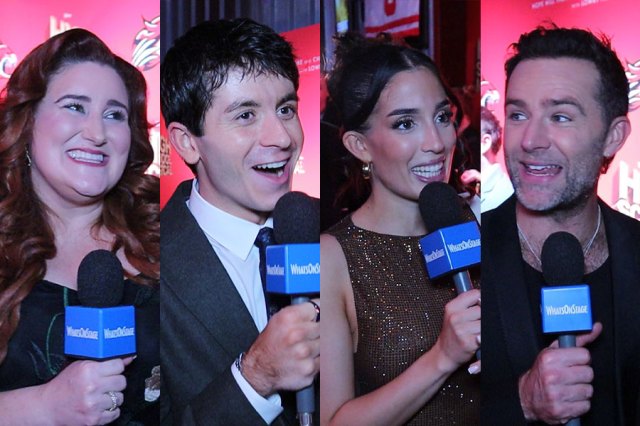
Disney’s High School Musical opens in London and the stars take a trip down memory lane
Bopping to the top at Troubadour Wembley Park Theatre!