
Half-baked or Michelin star? Did The Hunger Games leave a lot for the critics to chew on?
The reviewers have weighed in on the new show
 |
London
|
|
London
|
13 November 2025
Alex Wood, WhatsOnStage
★★★
“Adaptor Conor McPherson feels like a slightly surprising choice for the project. McPherson’s best work often explores quiet despair and spiritual unrest – not exactly the obvious fit for a blockbuster YA property that moves with frantic agility from plot beat to plot beat. The result, directed by Matthew Dunster, is a show that often feels caught between two impulses: thoughtful character study and full-throttle spectacle, and never really satisfyingly landing either.”
Holly O’Mahony, The Stage
★★★★
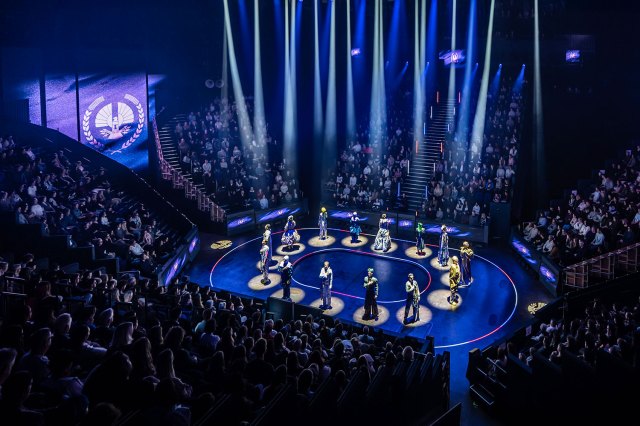
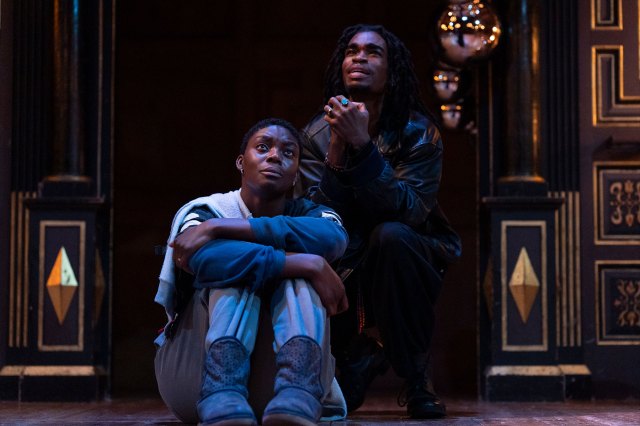
“There’s plenty here to impress fans of the franchise, and the space is used in its entirety. Set pieces rise up from beneath the arena-like stage, and props are lowered from above. Ian Dickinson’s sound design sends the flutter of birds’ wings around the auditorium, bringing us closer to the action; Kev McCurdy’s fight direction orchestrates gasp-worthy duels; and Chris Fisher’s illusions send arrows flying into the bullseye of their targets.”

Alice Saville, The Independent
★★★
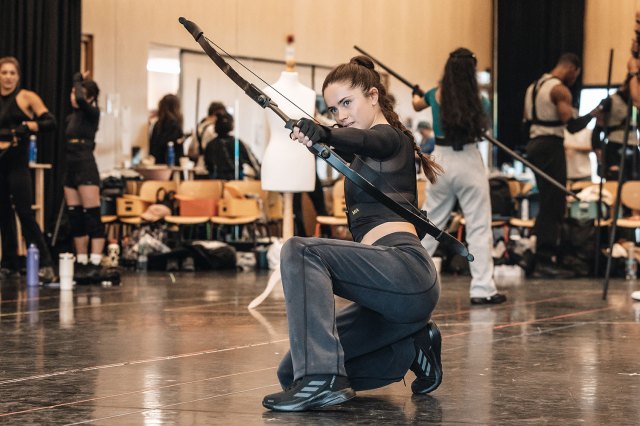
“A 21-year-old Mia Carragher is fierce and impressively athletic in her stage debut as protagonist and narrator, the archer Katniss Everdeen – a role made famous by Jennifer Lawrence on screen. And Dunster certainly puts her through her paces, making Carragher sprint round the vast stage over and over, as if she’s trapped in a more-than-usually sadistic school sports day. Her battles with the other tributes are achingly tense: especially when they’re evoked in hand-to-hand combat, rather than lyrical but slightly confusing dance sequences. At the show’s climax, Carragher scales a precarious steel beam high above her jeering rivals’ heads as flames lick at her heels – the danger is palpable.”
Andrzej Lukowski, Time Out
★★★
“Dunster is not a subtle director, and in many ways that suits Collins’s novel. He picks out the themes of class oppression between the gaudy dandies of the Capitol and dirt poor folk of District 12 – from whence heroine Katniss Everdeen hails – with day-glo aplomb. Smartly, the set of the-in-the round show (staged in the purpose-built Troubadour Canary Wharf Theatre, which is a bit like a fancy school gym) is steeply raked to resemble a sports stadium or the audience seating in a TV studio – we are implicitly cast as spectators to the games, with the action sequences lifted (and clarified) by the slickly amoral host Caesar Flickerman (Stavros Demetraki).”
Arifa Akbar, The Guardian
★★★
“The Super Bowl optics are all there from the off: a wardrobe of great gaudy glory (the 1960s, with twists of commedia dell’arte, the Palace of Versailles and alien-chic, designed by Moi Tran), a fast-changing set by Miriam Buether and energetic choreography from Charlotte Broom. The first half, prepping us for the gameshow, lacks tension, nonetheless. “We are just hours away from being mortal enemies,” Katniss says. But you don’t feel the dread in Conor McPherson’s adaptation, which seems clipped by the pace of events, all spectacle above emotion.”
Claire Allfree, The Telegraph
★★
“Evidently the brief was to emulate the films as closely as possible, given the replica score and abundance of recycled visual motifs, from the dust bowl aesthetic of District 12 (admittedly nicely created through a balletic use of wooden doors) to the fun-house grotesquerie of the Capitol (Stavros Demetraki’s rictus-grinning TV presenter Caesar Flickerman even has the same blue hair as Stanley Tucci). A staggering two-page-long list of producers and co-producers is proof of the corporate control perhaps being levied.”
Clive Davis, The Times
★★
“Although John Malkovich’s face stares out of some posters for the show, he is present in video form only as the country’s ruler, President Snow. Even those brief clips are stilted, as if shot in a ten-minute break between his other assignments. Meanwhile, the fighters rush around wielding their axes, bows and arrows. Recorded music provides an occasional backdrop. The atmospheric forest scenes in the film are conveyed through the use of gantries, while lifts in the floor become burrows for forest creatures. It’s not the fault of the actors that the effect is humdrum.”
Sarah Hemming, Financial Times
★★
here are also some strangely redundant dance sequences and confusing plot twists. Audience interaction feels oddly halfhearted. And, perhaps most crucially, there’s little emotional impact. We are watching children die — that should hit hard, but it doesn’t. The show is at its most moving when it becomes more intimate. Joshua Lacey finds depths in games mentor Haymitch. And when Euan Garrett’s likeable Peeta is injured, both he and Carragher have space to act quietly, subtly and truthfully.




Related Articles
See all
Latest Reviews
See all




Latest Videos

Cabaret releases footage of Matt Willis and Katie Hall in the West End
Life, and this trailer, is beautiful!