
Award-winning producer Ellie Keel talks her debut play Skye – and why it had to be a thriller
The award-winning theatre producer is swapping hats for her debut play – opening this summer
 |
Edinburgh
|
|
Edinburgh
|
31 July 2025
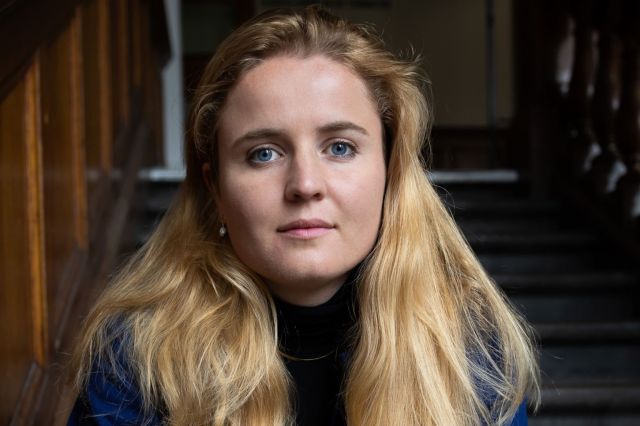
Ellie Keel is a name synonymous with powerhouse theatre producing, particularly at the Edinburgh Fringe. Her company has brought acclaimed productions to the festival year after year, including hits like An Interrogation, Sap or Bullring Techno Makeout Jamz. Her work with the Women’s Prize for Playwriting has also generated some spectacular successes. But this August, Keel is stepping into a new role: playwright. Her debut play, Skye – a thriller, set against a Scottish backdrop, premieres at Summerhall.
For years, Keel has been a champion of new writing, meticulously bringing other playwrights’ visions to life. So, what prompted this dive into writing herself? “In some ways, it was only a matter of time,” Keel muses. “In other ways, I could have quite happily and peacefully carried on life without writing a play! But it’s also a great adventure to be going on, and that was the idea really – to have another adventure.”
This shift has brought her closer to the creative heart of theatre. “Going out with my own play has, in a way, taken me back to the creative part of things and the root of things,” she explains. The Edinburgh Fringe, in particular, offers a unique opportunity for this kind of creative spontaneity. “You really can write something in January and it can be on in August, which is what is happening in my case.”
As a seasoned producer, Keel has always prioritised respect for the writer and their work. However, experiencing the process from the other side has deepened her understanding. “There is no replacement for walking in somebody’s shoes,” she reflects. “Doing this will change the way that I interact with playwrights to some degree. The principles remain the same – respect for the work and getting to do justice to the writing – but it’s more in the detail that I now really understand.”
She highlights the nuanced support writers need and the crucial “alchemy of the rehearsal room” and the team. “All of these things I knew, but you know them in a different way when you know them personally,” she adds.
Skye‘s production marks a significant collaboration with Summerhall Arts, a rare co-producing venture for the operator overseeing the venue. Keel elaborates on how this unique partnership came about, particularly given Summerhall’s recent financial challenges. “Tom Forster at Summerhall, who I’ve worked closely with, kept asking what shows I was bringing,” she recounts. “I said, ‘Really, Tom, we need help actually making the shows!'”
Keel pushed for a genuine partnership, especially for a play set in Scotland and utilising Scottish talent. “It wasn’t a straightforward conversation; it took them a long time to come around to the idea because their coffers aren’t in the best shape,” she admits. “I said it’s not really about handing over large wads of cash; it’s about the way that we work together and working towards a common goal.” This approach, she hopes, might spearhead “a bit of a new way of working” for venues and producers.
This co-producing model is something Keel strongly advocates for across the Fringe. “I’ve always found it a bit weird, this sort of ‘we’re so lucky to have a slot’ but then we bear all the costs of the show and only get a split of the ticket,” she explains. “It’s what’s contributed to the reality that making a Fringe show is a very privileged sphere to be in. It would really help if there were more of these co-production slots in every venue.”
Given Keel’s diverse producing background, the choice of a thriller for her debut play might surprise some. “I do have a weakness for very propulsive work – suspenseful, mystery, intrigue,” she reveals, correcting herself with a laugh: “A love for it, not a weakness!”
She admits that some, particularly men, tried to dissuade her from writing a stage thriller, especially one confined to an hour. “I’m just one of those irritating people, I’m afraid, that any whiff of something not being possible or being difficult or not quite the thing, I just want to do it even more!” she asserts.
Skye is designed to deliver information and tension, masquerading as a family drama. The central question: “Is the man the narrator sees on the beach at the start of the play her father, or is it not?” This core mystery drives the narrative, promising an adrenaline-fuelled experience for the audience. “We’ve got one central question, and what the heck is going to happen during this investigation?”
Keel recently ventured from stage to page with her first, bestselling novel – The Four. It’s a sublime summer read. Comparing playwriting to novel writing, Keel highlights the stark differences. “There are few similarities, and the similarities get fewer and fewer the further down the process you go,” she notes. “Writing a play and putting on new writing is a very collaborative act, and that is not the case for writing a novel.”
One of the biggest lessons? The need for humility. “You are putting this work in front of people who are going to speak it and will have opinions,” she explains. Unlike a novelist who can reject editorial suggestions, a playwright’s work is open to interpretation and moulding by the director and actors. “You have to be prepared to let your vision be, to some extent, moulded.”




Guide

Related Articles
See all
Latest Reviews
See all





Latest Videos

Watch Emily Lane perform “It Roars” from Mean Girls rehearsals
The new tour opens this month