
A Grain of Sand at the Arcola Theatre and on tour – review
The Good Chance production is written and directed by Elias Matar and performed by Sarah Agha
 |
Tour
|
|
Tour
|
26 January 2026

Good Chance’s (The Jungle, Kyoto) one-person show A Grain of Sand was commissioned for the London Palestine Film Festival in 2023 and then appeared at the Liverpool Arab Arts Festival last summer. It now begins a UK tour at east London’s Arcola Theatre.
Based on the verbatim source A Million Kites, a collection of poems and testimonies from the children of Gaza compiled by Leila Boukarim and Asaf Luzon, and adapted and directed by Elias Matar, it’s a delicate piece of work that beautifully bridges the whimsically intangible and the horrifically real.
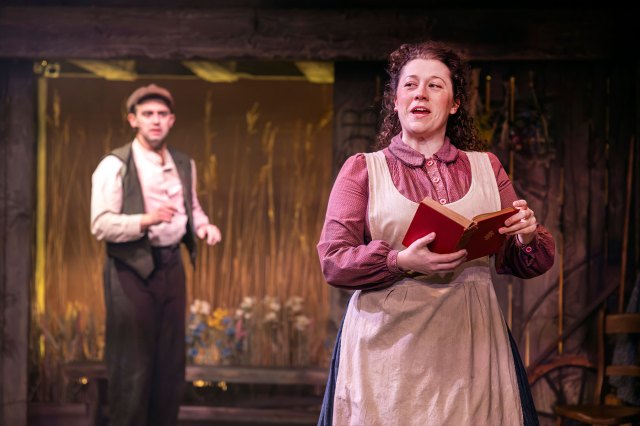
Performed by the mesmerising Sarah Agha (who is also credited as co-deviser), the piece is narrated by Renad, a young Palestinian girl separated from her parents, siblings and grandmother, whose personal story is interspersed with the words of numerous other Palestinian children. Renad wants to be a storyteller when she grows up and has been raised on Palestinian folk tales, helmed by the principal figure of the phoenix Anqaa, who guards Gaza and is imbued with an endless capacity for regeneration (the metaphor is self-explanatory).
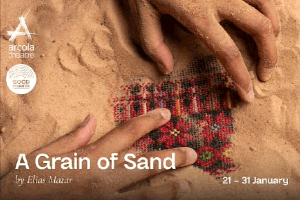
The stage contains a mound of sand (designed by Natalie Pryce) and a changing backdrop (video design by Dan Light). Dressed in dungarees with her hair in plaits, Agha is a picture of childlike innocence, but she eschews sentimentality, expressing so much through small gestures and gritted resilience.

Renad is forced to flee on her own to different places of safety, none of which prove a haven for long, as nowhere is off limits from being bombed. A hospital that, a year earlier, was spotlessly clean and had a gift shop selling flowers and balloons is now in utter chaos. Yet it also provides a joyful reunion with a classmate who, in ordinary times, was a bit of an annoyance. In a church, she learns about the Virgin Mary and her unwavering devotion to her son – that refuge too is bombed and the journey begins again.
The piece also explores the power of being able to laugh during the bleakest times. During one raid, the children find the strength to distract themselves with a ribald story about a particularly embarrassing fart that has the power to grant wishes. Renad’s dad has never liked this tale, but he might feel differently in such circumstances.
Towards the end, Renad discovers an aid box that’s been dropped in the sea – almost like another explosive device, though perhaps it was delivered by the beautiful mermaid her grandmother claimed to have seen as a child. She takes just one tin of beans, remembering what she has been told about not being greedy (the moral of the earlier story).
Renard considers whether she might be free if she were an object, carried along by the sea, but she is fated to be human. Without her realising it, it is suggested that she can be her own Anqaa – no child should have to display such resilience, and yet that’s what it’s come to.






Featured In This Story
Related Articles
See all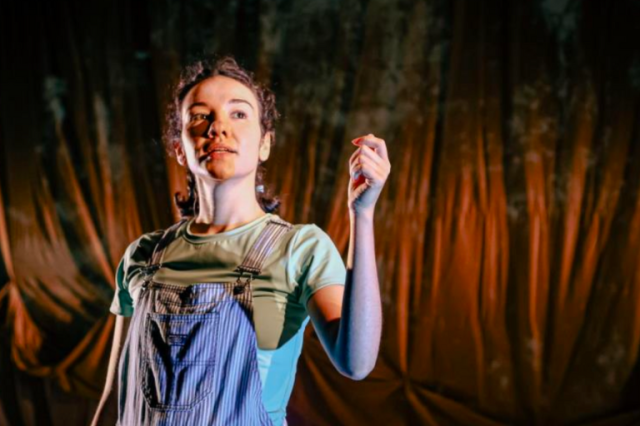

Latest Reviews
See all







Latest Videos

Watch Emily Lane perform “It Roars” from Mean Girls rehearsals
The new tour opens this month