Wicked: For Good review – thank goodness for Jon M Chu
The second part of the Wicked franchise soars into cinemas later this week
 |
Nationwide
|
|
Nationwide
|
18 November 2025
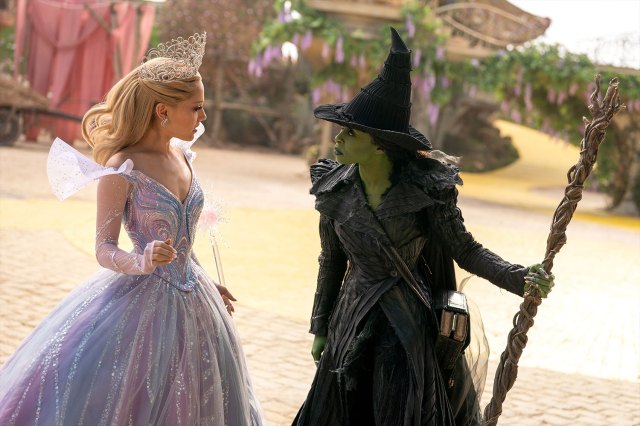
It’s generally acknowledged amongst musical fans that Wicked’s second act is the weaker half of the story (and speaking of story, this review doesn’t contain spoilers).
On stage, it’s leaner, flightier and far more fractured, struggling to live up to the show’s soaring first half. So the challenge for Jon M Chu and writers Winnie Holtzman, Stephen Schwartz and Dana Fox was steep: turning less than an hour of material into a two-hour feature film that can stand alongside last year’s wildly successful part one. Stretching a shorter act into a full movie could have risked bloat or repetition, but what’s striking is how well Wicked: For Good manages to hold itself together.
It’s funny to think that both films were shot simultaneously, because the tonal shift between them is immediate. If part one was a coming-of-age musical that blossoms into fantasy spectacle, this is closer to a political thriller or superhero epic – full of moral fog, fractured loyalties and world-shaping consequences. The scale of Oz feels broader this time.
We’ve also discussed the film on the WhatsOnStage Podcast – listen for free here:
The story hops between the Emerald City, Elphaba’s hideout and Fiyero’s travels, while Nessarose’s scenes explore the ripple effects of her sister’s actions. The film’s scope can feel dense, even cluttered, but that seems deliberate – Chu and his team are less interested in clean spectacle than in the fallout of choices made in part one. The word that kept coming up in interviews is “consequences”: both Elphaba and Glinda are haunted by whether they did the right thing, and the film takes its time exploring their doubt and guilt.
That’s the advantage of the two-part structure: space to earn emotional beats that the stage show often rushes through. Here, character u-turns, acts of forgiveness or defiance feel more grounded. There isn’t the same instant, viral appeal of something like “What Is This Feeling?”, but the film finds its weight elsewhere – in ambiguity, silence, or moments of uncertainty.
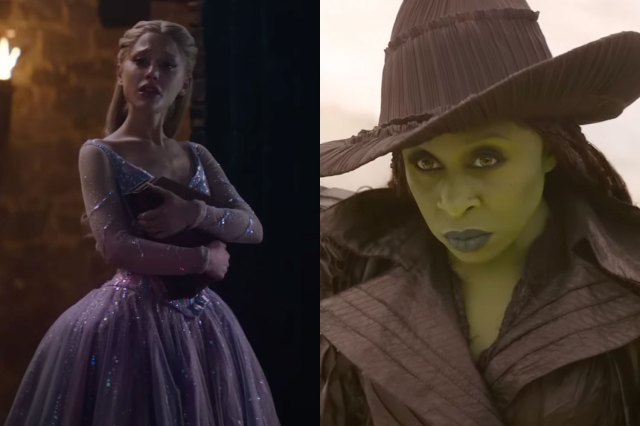
Both Cynthia Erivo and Ariana Grande revel in the chance to tackle messier, more conflicted material. If part one was about friendship and discovery, this sequel lets them explore guilt, betrayal and desire in ways the first film only hinted at. Erivo’s Elphaba feels worlds away from her Shiz days – shorter-tempered, more indignant and defensive, but gradually softening as she opens herself up to both Glinda and Fiyero. By the end, that transformation feels hard-earned, and it’s a tremendous performance.
Grande, meanwhile, sheds the heightened, almost Scarlett O’Hara energy of her earlier turn and dives into something more brittle and human. You see Grande’s Glinda wrestling with the weight of what she has done – setting in motion Nessarose’s fate, her turbulent romance with Fiyero, losing her best friend – and it’s often played with unexpected restraint. The new addition of flashbacks to Glinda’s childhood proves a clever choice, helping to chart her evolution so she feels less swept up by events and more an architect of her own tale. If anything, she emerges with a clearer arc than Elphaba, which might up-end some of the storytelling dynamic. That’s not to say she’s not genuinely funny here too – sparring scenes with Michelle Yeoh’s Madame Morrible are some of the film’s wittiest moments.
Jonathan Bailey’s Fiyero is more rounded, given a chance to show both the soldier and the lover beneath the charm. Jeff Goldblum delivers perhaps the film’s biggest surprise, lending the Wizard an air of genuine remorse that shades his usual showmanship. Marissa Bode gives Nessarose a tragic intensity, while Ethan Slater’s Boq teeters on the edge of mania in a performance that leads to some of the film’s darker passages.
Musically, there are fewer numbers than the last act. The eagerly-anticipated new additions, “No Place Like Home” and “Girl in the Bubble”, are perfectly adequate – not destined to be classics, but effective in giving both Erivo and Grande individual showcases. They may lack the instant melodic punch of “For Good” or “No Good Deed”, but they serve the film’s pacing well, offering moments of reflection that deepen the character work rather than halting it.
“No Good Deed” itself becomes the film’s most cinematic set piece – a whirlwind of sound and motion, with Alice Brooks’ camera looping and soaring through flying monkeys and stormlight to mirror Elphaba’s desperation. The result feels breathless, chaotic and entirely suitable. It’s something they could never do on stage.
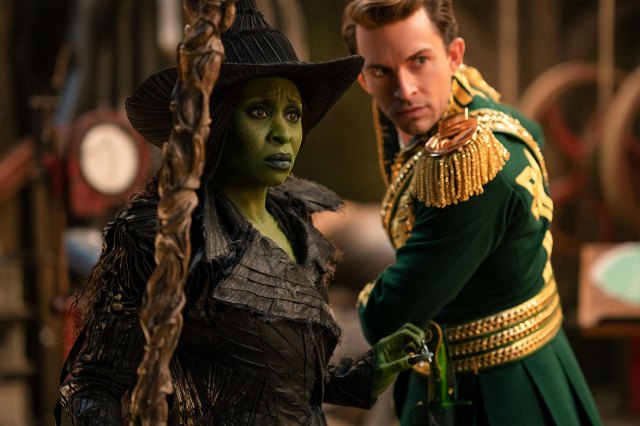
In contrast, “For Good” is presented in the simplest possible way – clean cuts between Erivo and Grande, no visual embellishment – letting their performances carry the scene. It’s understated, and means the film’s final 30 minutes are quietly devastating.
Production-wise, Wicked: For Good feels even grander than its predecessor. Nathan Crowley’s designs for Elphaba’s woodland lair and Glinda’s gleaming Emerald City apartment – all curves, glass and airy bubbles – are particularly striking, reflecting their opposing worlds. The wedding sequence, with Paul Tazewell’s costumes in full bloom, might be the most visually elaborate stretch of either film.
Brooks’ cinematography brings a deeper, richer palette to the concluding half, less about proving itself and more about trusting the material to carry the emotion. She also, miraculously, allows the Dorothy (Bethany Weaver) cameo moments to feel suitably deferential to Wicked‘s storytelling without being strong-armed into the film like they are on stage.
Stand-out cinematographic points come in Glinda’s apartment during “Girl in the Bubble” and during the finale, realised with harrowing emotional gut-punch. Chu’s direction ties it all together with a sense of controlled chaos: the world feels bigger, murkier, but still emotionally coherent.
It asks its audience to sit with doubt and compromise rather than easy catharsis. For a story about good intentions and their aftermath, that feels entirely fitting. For theatre fans who have loved this material for years and years, we couldn’t be happier. Oh and the final shot? Chef’s kiss.