
War Horse at the National Theatre review – still a theatrical miracle
The revival, helmed by Tom Morris and Katie Henry, returns to the show’s original home of the Olivier Theatre and runs until 30 July
 |
London
|
|
London
|
3 June 2026

Some theatrical magic works better the more of it you can see. War Horse, the much loved play fast approaching its 20th birthday and now back where it all began on the National’s Olivier stage, hides nothing: three puppeteers work it in full view, and that honesty is the trick. Coleridge may ask us to suspend disbelief but War Horse simply confiscates it.
Tom Morris and revival director Katie Henry trust adaptor Nick Stafford’s material completely, and are right to. Within 90 seconds the brain files “those are puppets” under irrelevant. Joey breathes, flinches, swivels an ear toward a voice. Toby Sedgwick’s choreography and Matthew Forbes’ puppetry direction make three people vanish into one creature, and the seam never shows. The horses don’t trot, they dance.
For those who haven’t seen it, the show retells Michael Morpurgo’s 1982 war novel about equine experiences on the Western Front, chiefly the wordless love story between colt Joey and the stallion Topthorn, which is somehow the most convincing romance on the South Bank. Adrian Kohler and Handspring Puppet Company haven’t built props: they’ve built animals with interior lives.
Rae Smith’s design does the most with almost nothing. Above the action hangs a torn strip of sketchbook sky onto which 59 Studio’s charcoal animations drift, clouds and dates and the slow scrawl of a frontline map, doing the work of a hundred tonnes of scenery. Christopher Shutt’s sound lands shells behind your shoulder and stitches gunfire across the room until the house holds its breath, set against Adrian Sutton’s score and John Tams’ live folk songs.
The bare Olivier stage gives the company nowhere to hide, and that exposure is the gamble Smith’s design takes and wins: with no walls to lean on, the acting has to be true, and it is. Rob Casey’s lighting conjures the worlds the scenery refuses to build. A wash of low gold and you’re in a Devon meadow at harvest. A cold sidelight and the same bare boards are a frozen French field at dawn. A stutter of white and the air itself seems to detonate. Men become silhouettes, vanish into smoke, come back as ghosts. It is astonishing how much world four lamps and a torn sheet of paper can conjure.
The large company hold their own amidst the puppetry magic. Tom Sturgess is a superb Albert; Jo Castleton and Stephen Beckett carry the home front as Albert’s nearest and dearest, Anita Adam Gabay’s Emilie and Daniel Rock’s Captain Stewart break you; Sally Swanson’s voice will carry you home.
Beckett doubles his Devon farmer with a steely Colonel Strauss; Rock’s Captain Stewart leads his men at the guns with the doomed gallantry of an officer who half-knows the cavalry age is over; and Manuel Klein’s German cavalry captain Friedrich is the production’s quiet masterstroke, drawn with such decency that the whole argument lands without a sermon: there are no enemies here, only frightened men on opposite sides of the same wire.
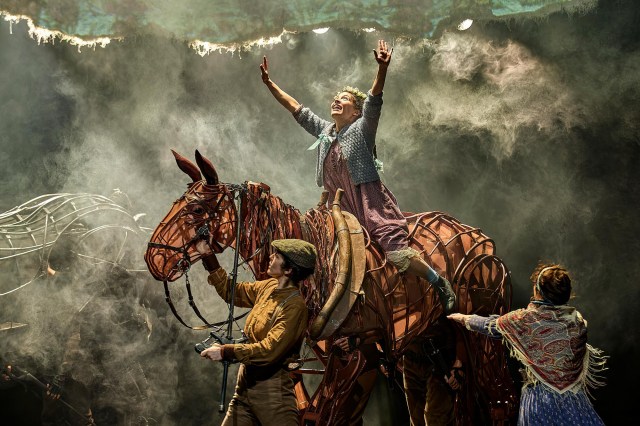
The sergeants and privates around them, Linford Johnson, Damian Lynch, Corey Montague-Sholay, Jack Lord, Nicholas Khan, Owen Dagnall and Anne-Marie Piazza among them, give the ensemble its backbone, and there is real bravery in how they play it: men going over the top, shivering in a flooded trench, singing on the march to a war they cannot yet imagine. When a British and a German soldier lay down their rifles in no-man’s-land to cut Joey free from the wire, the entire house stops breathing. That scene alone is worth the ticket.
It earns its tears honestly, which is rarer than it sounds; grown adults leave looking like they’ve taken a part-time job chopping onions. Two hours 40, and you’d swear someone pocketed an hour.
In an age teaching machines to counterfeit feeling, here is the opposite: four people, a heap of cane, breathing together. As long as War Horse exists, the National will be fine. Bring tissues. You’ll think you’re above it. You are not.





source on Google
Featured In This Story

Related Articles
See all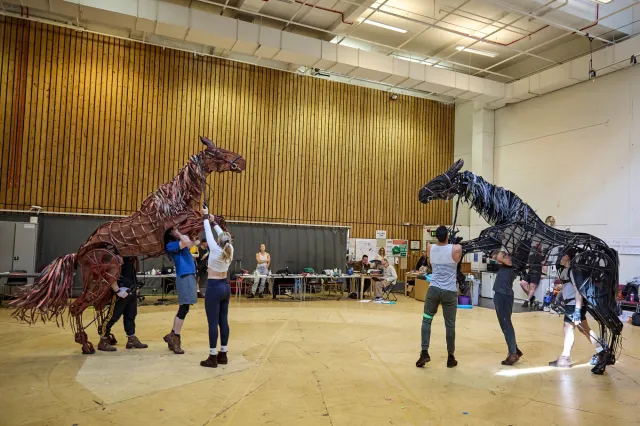


Latest Reviews
See all


Latest Videos
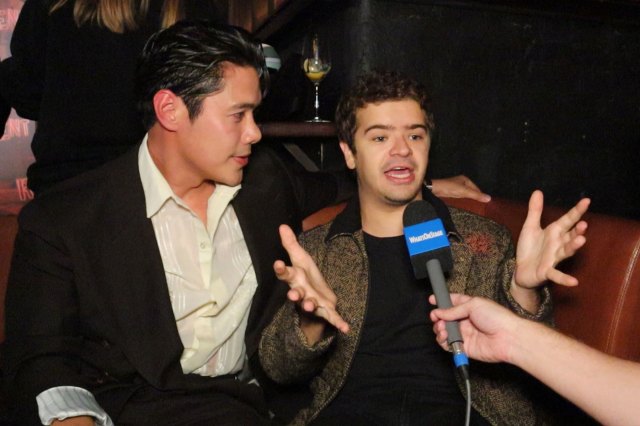
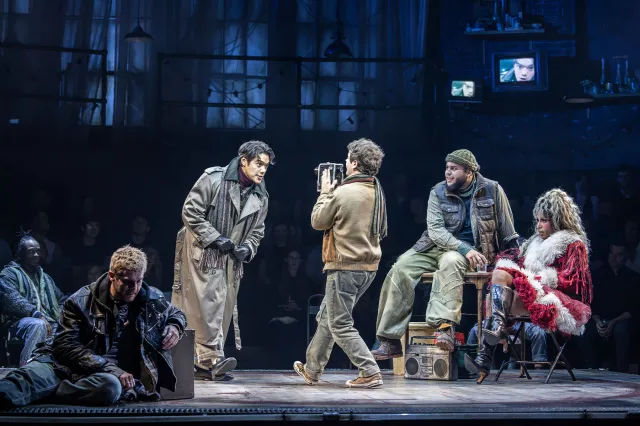
Gaten Matarazzo and the cast of Rent on living “La Vie Bohème” in the musical’s 30th anniversary year
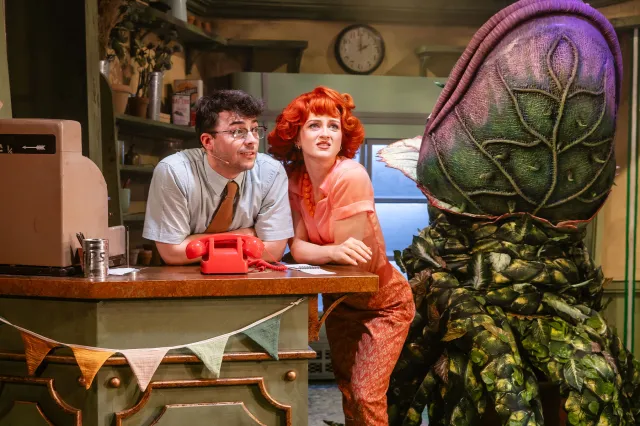
Luke Sheppard’s West End revival is now officially open at the Tom Stoppard Theatre!