
Fallen Angels at Menier Chocolate Factory – review
Christopher Luscombe’s revival of the Noël Coward comedy runs until 21 February
 |
London
|
|
London
|
3 December 2025
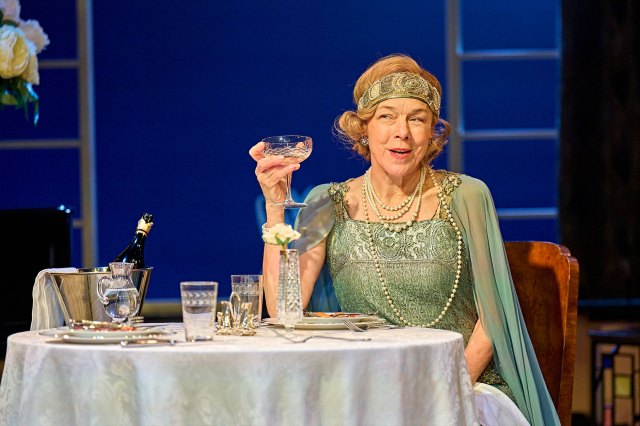
Noël Coward’s Fallen Angels hasn’t had a professional production in London for 25 years. And you can understand why. It’s a smart and sophisticated piece about two female best friends who go to pieces when the former lover they both shared turns up unexpectedly. But it has a brittle heart and some very dull patches.
When it was first performed in 1925, it caused a small scandal for daring to suggest that women could have sexual longings – and fulfil them – outside marriage. Now the obsession of the two friends, Julia and Jane, with their lost French love Maurice seems vaguely tiresome; their cleverness undermined by their passion.
In this way Fallen Angels seems both radical – the two women are very much centre stage and all the men are bit-part players – and incredibly old-fashioned.
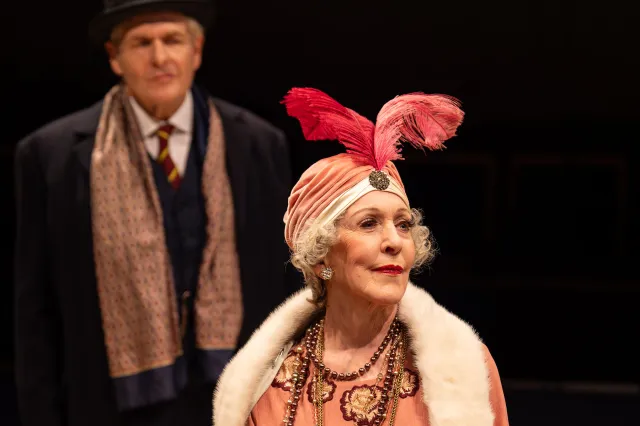
Christopher Luscombe’s sparkling production does everything it can to paper over the cracks and disguise the occasional longueurs and it is blessed with two uproarious comic performances from Janie Dee and Alexandra Gilbreath as the frustrated and excitable pair.
Simon Higlett provides the kind of glamorous art deco set that you might want to live in, its clean, crisp lines dominated by a baby grand piano and just enough period detail. Fotini Dimou’s costumes are a glory and perfectly conjure the easy, upper-class lives of the women who are married to two boring friends, Bill and Fred, (Richard Teverson and Christopher Hollis, both delightfully dull) who are kitted in Fair Isle singlets and golfing plus-fours like a pair of stuffed gulls.
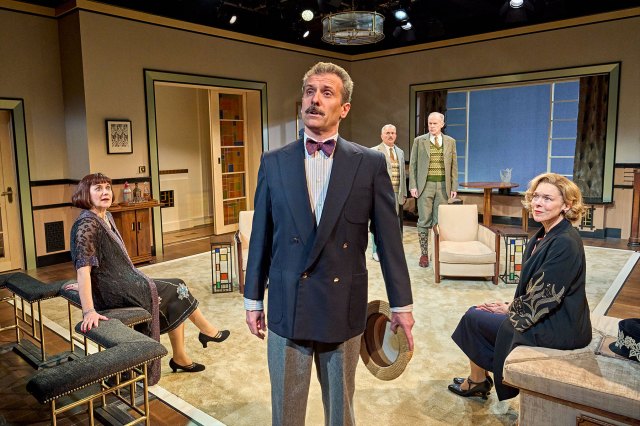
Left alone in London when the men head off for a golfing outing in Chichester, the women are thrown into a tizz by the unexpected arrival of their mutual lover, Maurice. Unable to decide whether to flee or stay, they end up getting horribly drunk over dinner, falling out in a jealous quarrel, and then making up as they try to patch together their respectable lives.
The problem with the play is that it is not much more than that; the best of Coward explores the deep emotions that lie beneath such surface entanglements. Fallen Angels just skates along. But it does so with considerable style.
Dee and Gilbreath present a wonderful study in contrasts. Dee is all wafty elegance, and assumed grandeur. Her tightly wrought hair, her knowing looks, her sophisticated clothes are all an indication of her character. She is a woman wound around a tight pin, conscious of status. Yet her piano playing is easily shown up by her know-all, perky maid Saunders (a brilliantly smug performance from Sarah Twomey) whose skills also extend to knowing what golf clubs to carry and a proficiency in French. The line “I became fluent during my time with the Ballet Russes” provides Luscombe with the excuse for a comic, danced scene change.
Gilbreath, on the other hand, breezes is all breathy excitement and barely contained delirium. “It’s a fearful, illicit thrill to look at his name,” she says, brandishing a postcard that announces his impending arrival. She becomes more flustered and frustrated as drink gets the better, draping herself over the furniture when Dee describes her own encounters with Maurice. As both women become “temporarily unhinged by sex”, the physical comedy increases: Gilbreath’s intoxicated fall out of her chair is matched by the way that Dee tipsily overturns herself as she flails her arms in excitement.
But both also excel at wrenching every bit of meaning, and every wide-eyed reaction out of Coward’s lines. It’s their performances that carry the night and they are a joy.






Featured In This Story
Related Articles
See all

Latest Reviews
See all



Latest Videos

Into the Woods releases footage trailer and publishes new photos
Once upon a time…