
Waitress on tour review – perfect casting in a delicious musical serving
“Opening Up” across the UK
 |
Tour
|
|
Tour
|
1 April 2026
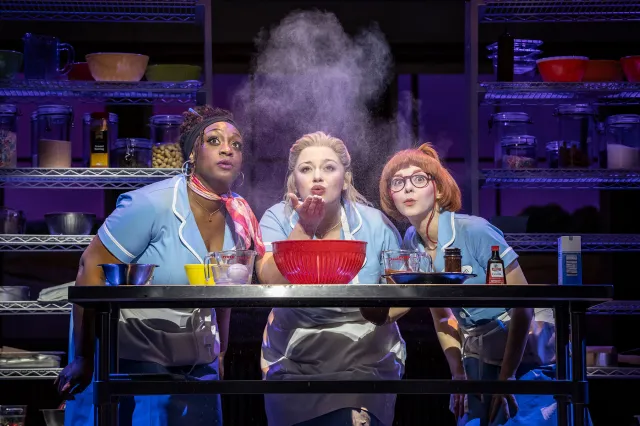
“It’s amazing what baking can do,” according to Sara Bareilles’ lyrics in the beloved Broadway and West End musical Waitress. Having watched this superbly remounted tenth anniversary production, on a UK tour after premiering in Wimbledon, director Diane Paulus’ original work recreated by Abbey O’Brien, I’d also add that it’s amazing what the right casting can do.
First time round, the London version sometimes featured celebrity performers who seemed cast for their star wattage rather than suitability to the roles. Here though, casting directors David Grindrod and Stephen Crockett field a team so perfect that a tuner that can come across as saccharine and synthetic in the wrong hands, hits with unmistakable emotional urgency and irrepressible humour. There’s also an attention to detail that I’ve never experienced in any previous iteration of this show, the charms of which have mostly eluded me until now.
Carrie Hope Fletcher’s approachable, apple-pie niceness has seldom, if ever, been seen to such advantage as it is here as Jenna, the diner waitress trapped in an abusive marriage and with a baby on the way. Fletcher invests this lovable, troubled young woman (“she is broken and won’t ask for help, she’s messy, but she’s kind”) with a rare warmth, but also a palpable core of steel and a deep well of melancholy. This is a mature, accomplished performance, unshowy but gorgeously sung and authentic. She breaks your heart by stealth.
The affection between Jenna and her co-workers and best friends, ebullient, ballsy Becky (Sandra Marvin, utterly gorgeous) and timid, anxious Dawn (a delightfully kooky Evelyn Hoskins) is palpable and real. These women make a formidable team and, crucially, we fully invest and believe in them. They’re frequently very funny, but seldom at the expense of plausibility. Marvin’s rendition of “I Didn’t Plan It”, Becky’s hard-bitten showstopper about accepting a less-than-ideal existence, makes the hairs on the back of your neck stand up.
Waitress is a powerfully female-led show, but such is the quality of this iteration that the men don’t just feel like afterthoughts. Dan Partridge as Dr Pomatter, the medic who might offer Jenna a way out of her appalling marriage, has a nerdy, neurotic vitality that entrances, but also some depth. Dan O’Brien is hugely appealing as the diner manager Cal, whose bark is much worse than his bite, and Mark Anderson scores an absolute triumph as the adorable eccentric Ogie, who falls for Dawn. Les Dennis adds crotchety gravitas and huge heart as the elderly diner regular Joe, who sees Jenna’s true worth. Mark Willshire succeeds in finding some colours and layers in the thinly written role of the horrible husband, Earl.
Jessie Nelson’s script, set in small-town America and based on Adrienne Shelly’s 2007 movie, is played with such gusto and sincerity that the gear changes between ribald humour, tentative romance and discomfiting social realism are barely perceptible. For a musical book, there’s a surprising complexity in the way relationships are portrayed (the majority of sexual liaisons depicted here are extramarital), even if there isn’t enough time or bandwidth to explore them satisfactorily.
Although there are a few too many of them, Bareilles’ poppy, country-inflected songs have seldom sounded as fine as they currently do. Rob Bettle’s sound design ensures that every lyric and vocal harmony registers. In all honesty, the uptempo numbers tend to feel like an album rather than actual theatre music, but the ballads have a shimmering grace that belong entirely to the stage.
The apotheosis of the score is, of course, “She Used To Be Mine”, Jenna’s ode to her unborn child as she simultaneously laments the life she used to lead, and as fine a show tune as anything created in the last three decades. Fletcher, in a career-redefining performance, delivers this tear-stained folk aria with breathtaking simplicity and intensity.
There’s a Broadway sheen to Scott Pask’s set, Ken Billington’s lighting and Lorin Latarro’s dreamlike, if slightly overused, choreography that prioritise glamour over grit, and Waitress treads a fine line between escapism and truth that sometimes gets fudged. But in this current production, it’s in really terrific shape, and during the more quiet, reflective moments, even with an ebulliently enthusiastic press night audience, you could hear a pin drop. Sugar… butter… flour… magic.






Featured In This Story

Related Articles
See all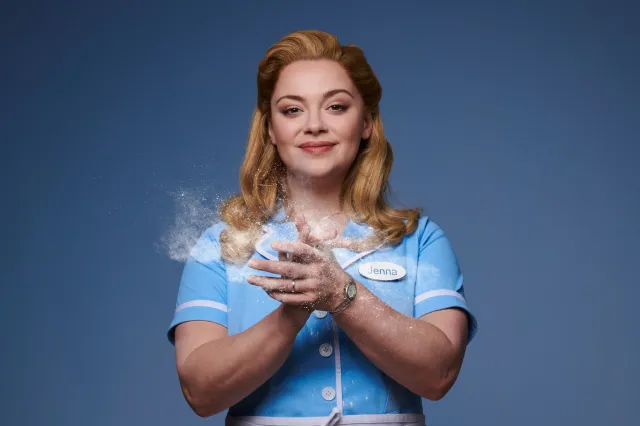

Latest Reviews
See all

Latest Videos
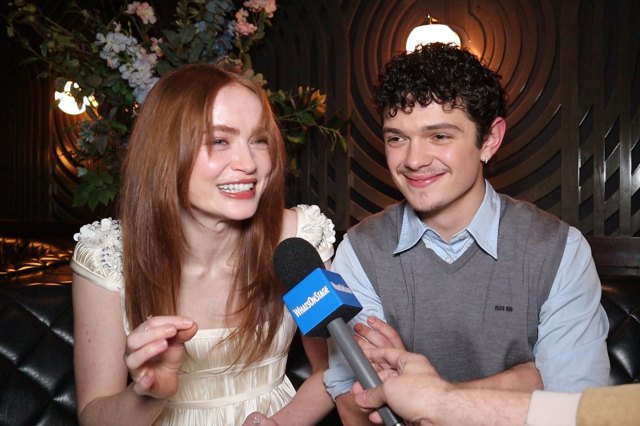
Sadie Sink and Noah Jupe make their West End debuts in Romeo and Juliet – watch the highlights
Robert Icke’s new production is officially open at the Harold Pinter Theatre!