
Under Milk Wood at Theatr Clwyd – review
Kate Wasserberg’s revival of the Dylan Thomas classic runs until 4 April
 |
Mold
|
|
Mold
|
20 March 2026
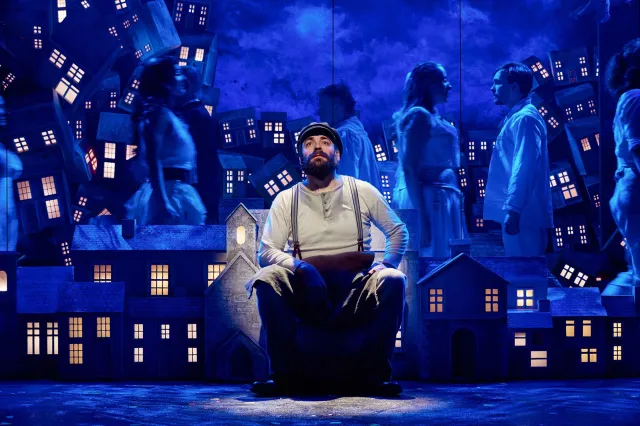
Under Milk Wood begins as a blue-tinged, backwards sort of utopia, where sleepers drift from dusted rooftops to cobbled streets, revealing the dreams of Llareggub before the sun turns inward on memory, buzz, and the truths of its inhabitants. Certainly not without imperfection, what unfolds is a stunning collage of a single day.
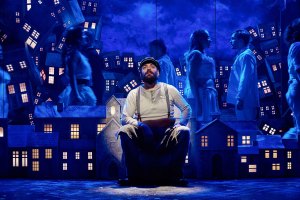
On the Theatr Clwyd stage, cottages sit trampled beneath a sea of voices, backed by a wash of stars and sundown in Hayley Grindle’s idyllic storybook set. Under the direction of Kate Wasserberg, the production highlights its range of representation through an inclusive and talented ensemble, and across its two-hour runtime, the energy never wanes.
Act one in particular feels like a Celtic pastiche, rooted firmly in Welsh cadence, chaos and community, carried through song and spoken word. If you are unfamiliar with the work of Dylan Thomas, the immediate plunge into its fast-paced, interwoven narrative can feel disorienting and clever nuances may be missed, such as Jack Black’s cries of “Ach y fi!”, a Welsh exclamation of disgust that Anglophone audiences may not catch. Yet the cast shape each character with such conviction that what may feel elusive soon takes its hold.
What becomes abundantly clear is that the action lies not in the plot, but in Thomas’s language. A cast of 11 bring his writing to life with textured brilliance, carrying it with rhythm and musicality. Among the 60-odd characters, particular standouts emerge in Rosie Probert (Mirain Fflur), whose melancholy lilt lingers, a shrilly frilly Mrs Pugh in Amy Conachan’s hands, and the sea dog Captain Cat of Douglas Walker. Despite each cast member moving collectively between their roles, it is these townsfolk who leave the deepest impression, their stories sending out metaphorical letters of hiraeth. A brief technical issue with sound disrupts this immersion once or twice, but it is fleeting, and the production quickly regains its hold.
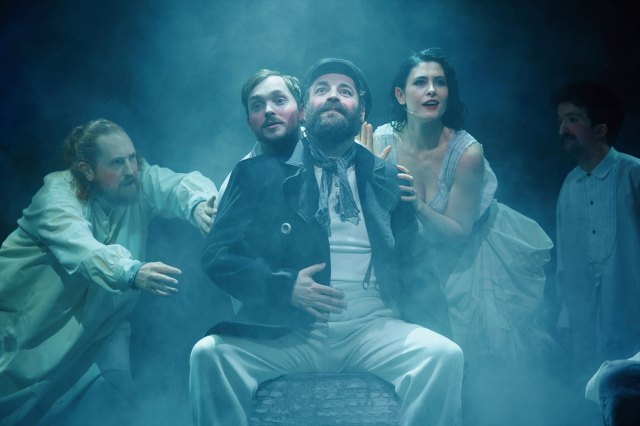
The first half feels more drawn out than the second, as the townsfolk shed their dreams and come fully into themselves. Macsen McKay breathes a fresh, unsettling life into Mr Pugh, who seems not to have entirely left his dreamscape, retreating instead into the laboratory of his mind, where he toys with darkly comic visions of Mrs Pugh’s demise. This makes for momentary, darkly comic relief before we dive into the grief-filled sea that settles beneath the town, that is so cleverly depicted by this ensemble.
The dance of voices is further refined through dreamlike video from the enchanting design of Joshua Pharo and Sarah Readman, and an otherworldly soundscape from Liam Quinn. The First and Second Voice flutter across the backdrop of the stage in beautifully rendered captions, the text itself swirling and dissolving like ash and dust, offering both visual poetry and a guiding thread through the story. Beneath it, a layered soundscape of ticking clocks, distant waves, strings and scattered laughter builds an eerie cacophony that settles you right into the heart of Llareggub.
In its scale and ambition, this staging of Under Milk Wood is a magical production that draws something luminous from the everyday, allowing the ordinary to glow. The pace never falters, the characters live fully on stage despite there never being enough bodies at once, and the illusion of an entire town is sustained with remarkable ease. It is, quite simply, a beautifully realised piece, confident in its vision and deeply attuned to Thomas’s language, that lingers long after dusk.





Related Articles
See all

Latest Reviews
See all


Latest Videos

Miss Saigon releases new trailer as West End run goes on sale
The heat is on… with a West End run next year!