
Sugar Daddy at Underbelly Boulevard review
Written and performed by Sam Morrison, and co-produced by Alan Cumming and Billy Porter, the piece runs until 4 April
 |
London
|
|
London
|
11 March 2026
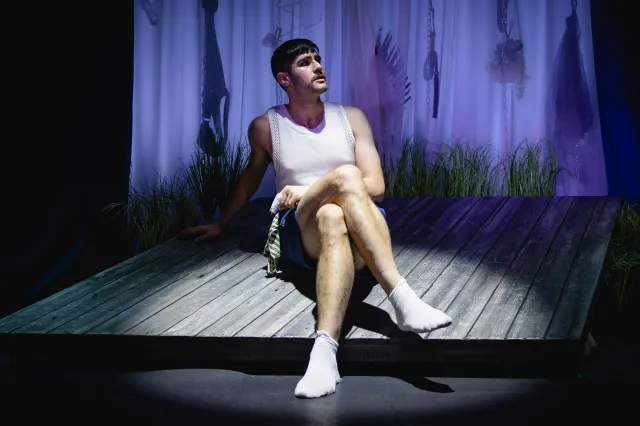
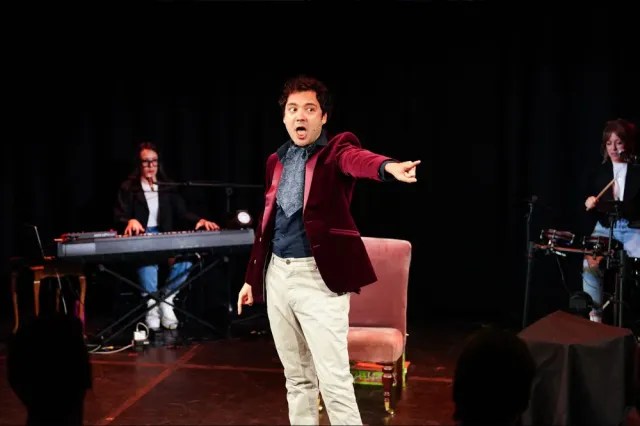
There is a moment in this tender, raucous riot of a one-man show when writer and comedian Sam Morrison stands before the audience wearing a pair of seagull wings attached to a leather chest harness – the kind you might have spied in a Soho shop window en route to the theatre. He squawks. Without missing a beat, the audience squawks back. “I love you!” he shouts. “No!” they holler, delighted to be included in one of his ingenious callbacks, before the whole place erupts into applause. It’s a perfect snapshot of the surety on which this show hangs: that Morrison has everything – the surreal, the subversive, the vulnerable, the hilarious – under masterful control.
And it’s a good job, because its central theme is as messy as they come: grief. In his 20s, Morrison fell in love with Jonathan, a “zaddy” with an irrepressible joyfulness, an irresistible belly, and arms that made Morrison feel safe. A few years later, he contracted Covid and died.
In a show that is part stand-up, part narrative storytelling, Morrison takes us through their love story, his experience of loss, and the Type 1 diabetes diagnosis doctors said was triggered by the tsunami of emotions enveloping him after Jonathan’s death. I laughed so much I gave up on my diet coke for fear of spit-takes.
Clearly there’s a tonal tightrope being walked but Morrison is all about balance. Memories of the couple’s time together, both the sweet (see that secret squawking language they made up during lockdown) and the painful (chief among them Jonathan’s final days in intensive care) are deeply moving. But they’re always saved from mawkishness with perfectly timed, tightly honed, often pitch-black jokes: “What is trauma but unmonetised content?” muses Morrison, and later: “If you want some of [Jonathan’s] ashes, they’re on my Patreon.”
Grief isn’t the only theme on which Morrison tests the boundaries of our comfort: we’re also asked to confront our relationship with sex, queerness, race, allyship, and more. But it’s all done with a kindness that makes the audience feel safe not scolded. And there are plenty of sections there just for the sake of glorious silliness. Morrison’s impression of Jonathan as a petty ghost, and an exploration of raisins as shrivelled old queens are two highlights: “you know all they’d talk about is how they used to be grapes.”
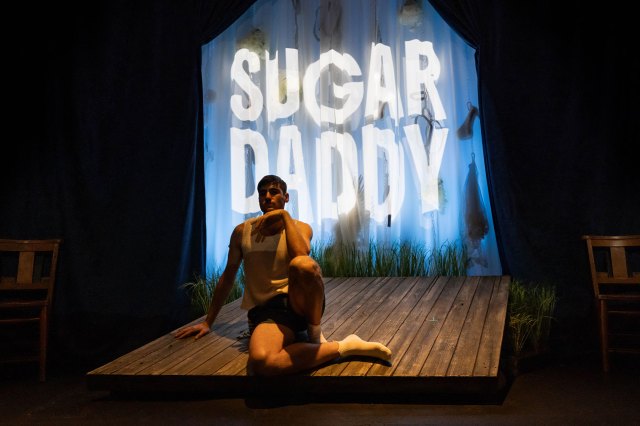
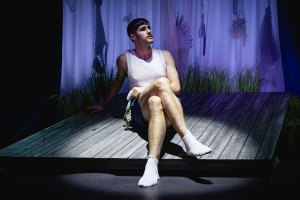
Director Amrou Al-Kadhi’s stagecraft is sparing – the right choice given how captivating Morrison is. The set is a small tilted platform that becomes the roof terrace of the couple’s favourite pizza joint, and there are simple but well-placed sound effects, lighting changes and projections, often requested by Morrison – fitting for a show with no fourth wall.
There is one, more intrusive, flourish: a booming voiceover of Morrison’s internal monologue – characterised as a bossy drag-queen-come-therapist – which interjects repeatedly to encourage him to sit with his feelings rather than deflect them with humour. At times it feels like shoe-horned theatricality but it also helps Morrison make his most important point: that we all grieve differently, and that’s okay.
Morrison’s tactic is to take control of grief by making fun of it or “slapping it in the face” (he also recommends some X-rated things you can do to grief, illustrated with a brilliantly blue mime). It’s a freeing, inspiring notion to head home with. It’s also the foundation of a bloody funny night at the theatre.





Featured In This Story
Related Articles
See all
Latest Reviews
See all



Latest Videos

26th Annual WhatsOnStage Awards – watch the full highlights
Oh, what a night at The London Palladium!