
Romans, a novel at the Almeida Theatre – review
Alice Birch’s world premiere play runs until 11 October
 |
London
|
|
London
|
18 September 2025
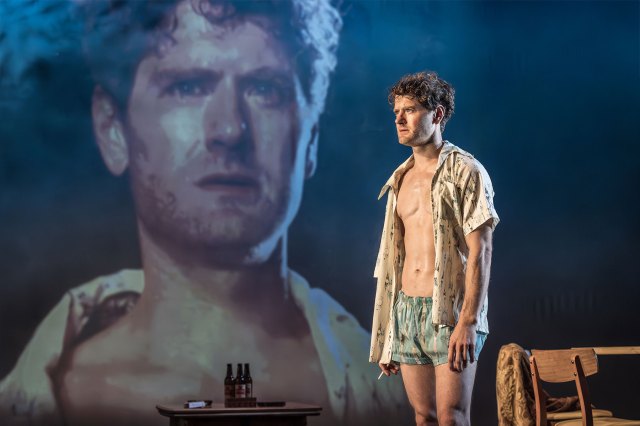
President Trump continues his assault on women’s rights, the manosphere seeps ever more sickeningly into the mainstream, and as if by feminist magic, Alice Birch, eviscerator of the patriarchy, returns with a play about masculinity.
But this is no shaming takedown; there are no cheap shots at manhood here (OK, maybe a few). It’s something much more useful. An era-spanning, heart-shattering exploration of the male experience – so often drenched in loneliness, repression and impossible expectation – and the havoc it wreaks on men and the world.
Three brothers’ lives stretch impossibly from the mid-19th century to the present day. Their childhood is marred by trauma – the death of their soft, loving mother, the sadism of boarding school teachers, and the emotional distance of their father. And as they grow, each finds a very different answer to the question of what it is to be a man.
Hurtling through decades, they morph from one problematic or pitiful form of masculinity to another. Jack from Hemingway-esque youth seeking purpose in adventure, to exploitative novelist to cancelled cult leader. And Marlow from school bully to colonist to capitalist to billionaire/Andrew Tate horror hybrid. Edmund, the youngest, struggles to find any identity at all. His baffled response when told to make something of himself is: “I do not have the pieces.” By the present day, he is living as a badger.
Each era is also marked by the distinct literary style of its time (this is the form-juggling Birch after all). An exploration of the history of masculine narratives through Dickensian stylings, experimental modernism or present-day satire.
Such a sprawling, spewing beast could only be wrestled into meaning by a talent as staggering as Birch’s. Few working playwrights can match her instinct for story and form, but her mastery of language is almost mystifying. The stylistically kaleidoscopic script is also rhythmic, poetic, fiercely funny, deeply rooted in character, and at times literally breathtaking; it winds with brute emotional force.
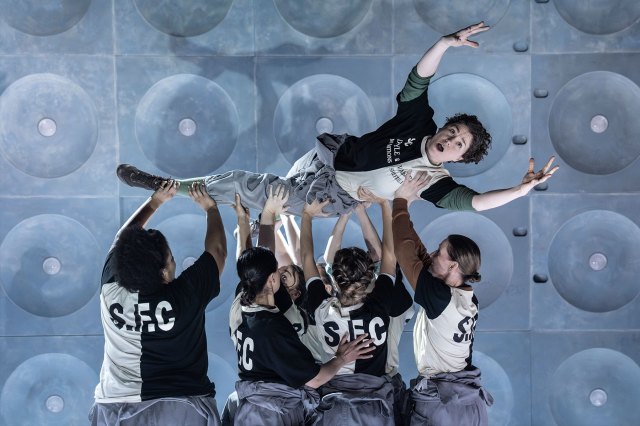
The production’s other creatives more than match Birch’s brilliance. Merle Hensel’s spinning set smartly reflects the passage of time and the men’s confusion, while unsettling patterns are projected onto a precariously draped veil at the back of the stage. Benjamin Grant’s sound design is atmospheric and arresting but never overwhelming.

Under Sam Pritchard’s meticulous direction, the cast also dazzles. Kyle Soller, Oliver Johnstone and Stuart Thompson – as Jack, Marlow and Edmund – straddle the many facets of their shifting identities while tracing each man’s through line: Jack’s grapples with truth and representation, Marlow’s greed and cruelty, and Edmund’s dissolving selfhood. The other six cast members are equally adept, shrugging characters and decades on and off with ease. Agnes O’Casey is particularly powerful as Jack’s wife, a promising writer gutted by motherhood.
Occasionally, the women make a play for control of the narrative, but in a depressing reflection of life since day dot, they remain at the edges of men’s stories – objectified, fought over, declared mad. If they speak for too long, men check their watches or physically wrestle them from their microphones. At one point, two female characters remove their own mic packs and wonder aloud if they’re saying the lines the men want them to.
By the second act, the play’s many forms feel ready to collapse in on themselves, and Birch’s writing only just holds them together. There is less empathy too, as we watch cancelled Jack fake his contrition, and podcast bros bray ‘Paedos!’ at involved fathers. But the first act, with its formative trauma, casts a long enough shadow; we know where this abhorrence sprang from.
And that seems to be Birch’s challenge to us: to remember and to interrogate. When male vulnerability is met with a spit in the face. When little boys like Edmund are taught only to “do an impression of a man” – one that involves hardening and repressing – is it any wonder they oppress in return? Perhaps then, the real challenge is to nurture.





Related Articles
See all


Latest Reviews
See all






Latest Videos

Kinky Boots with Johannes Radebe – watch the London Coliseum cast in action
Step into the Land of Lola!