
My Fair Lady with Alan Cumming and Verity Power at Pitlochry Festival Theatre – review
Maria Friedman’s revival of the Lerner and Loewe classic runs until 31 December
 |
Pitlochry
|
28 November 2026
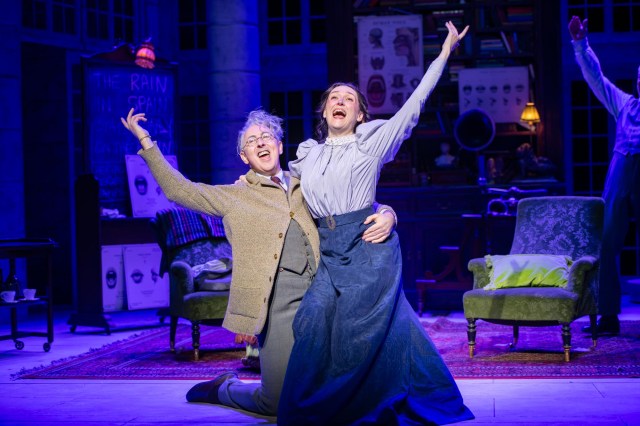
There can’t be many shows in the history of Pitlochry Festival Theatre that have opened with as much anticipation as this one. There has been a crackle about the place ever since Alan Cumming took over as the theatre’s artistic director last summer, and for Pitlochry patrons the prospect of Cumming playing Henry Higgins in My Fair Lady was too good to miss. So good, in fact, that the entire show, which runs until New Year’s Eve, has already sold out.
The box office should be besieged for returns, however, because it’s a delight. Cumming is, indeed, the main draw, because the part of Higgins plays to all of his strengths. His mercurial stage presence and playful physicality make him a surprisingly good fit for the petulant professor, and he throws everything he has at bringing the character to life, by turns tetchy, blustering or calculating, but with an overweening arrogance that is tempered by a very slight touch of insecurity. His Higgins is upper class with an edge – there is still a tinge of Scots to his accent and, tellingly, he wears a kilt to the embassy ball – and he frequently seems to delight himself with the cleverness of his own turns of phrase. He might not be the finest singer ever to walk the boards, but Higgins’ Sprechgesang style of music suits him, and he acts the part with such winning confidence that he captures the audience completely.
Opposite him, Verity Power is a treat. She brings a touch of the pop star to Eliza’s early songs, slightly reducing the extent of the transformation from the guttersnipe to the society lady, but she’s very funny in her interactions with Higgins and Martin Ball’s likeable Pickering, and she brings a touch of poignancy to the Eliza who knows she has left her old life behind. She’s also a terrific singer, making “I Could Have Danced All Night” the climax of the first act, as well it should be.
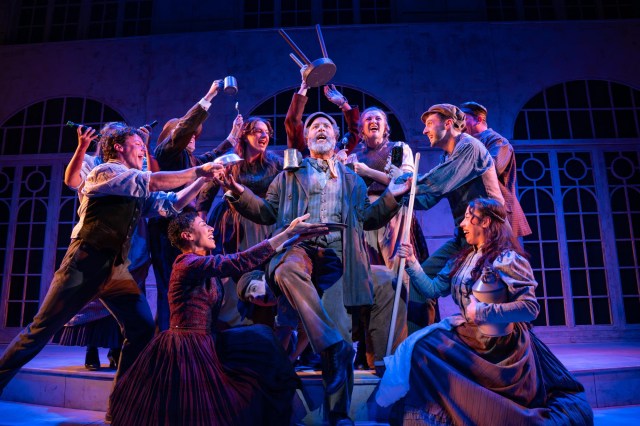
The rest of the cast are just as good, from Alexander Newland’s likeably roguish Doolittle to Alex James-Hatton’s boyishly giddy Freddy or Julie Legrand’s imperious Mrs Higgins. Importantly, this still feels like a Pitlochry company affair, rather than bringing in the stars from afar, and the supporting ensemble throw themselves into their various roles with terrific energy. The chamber arrangement of the score takes a while to tune into if you’re familiar with the more opulent scoring used elsewhere, but it’s played very well by the show’s musicians, and they are ably directed by Ben Kubiak.
Maria Friedman’s direction contains countless little physical touches that point up the characters’ personalities and deepen the comedy, while Tim Hatley’s handsome designs serve the story with flexible sets, atmospheric stage pictures and some lovely costumes. Eliza’s entrance before the embassy ball is managed particularly beautifully.
It’s not perfect: the ending, in particular, removes the delicious ambiguity of the final scene and ties everything up just a little bit too neatly. However, I was completely swept up in a show that wins you over with its energy, dedication and sheer good humour. It’s the triumphant climax of Alan Cumming’s first year in Pitlochry. Now it’s time to buckle up for year two.





source on Google
Related Articles
See all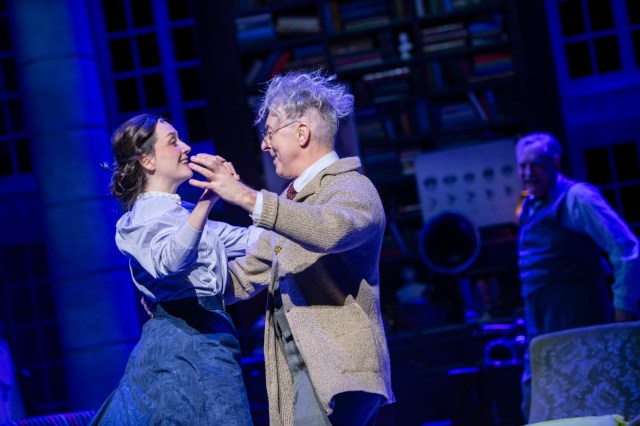
Latest Reviews
See all

Latest Videos
Disney’s Pirates of the Caribbean: The Immersive Adventure – take a look behind the scenes
Pirate so brave on the Seven Seas!