
Beautiful Little Fool musical at Southwark Playhouse Borough – review
Hannah Corneau and Mona Mansour’s new musical, directed by Michael Greif, runs until 28 February
 |
London
|
|
London
|
23 January 2026
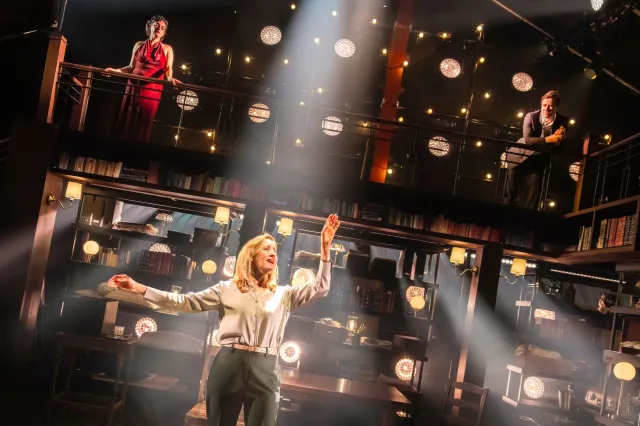
Despite stellar performances, glossy production values and the presence of an acclaimed Broadway director (Michael Greif), this ambitious but uneven show feels very much a work-in-progress rather than a satisfying finished product. Like the current Already Perfect up at the King’s Head, Beautiful Little Fool is another transatlantic production apparently using London as a testing ground for new material, thereby avoiding the eye-wateringly high costs of opening cold in New York. It’s an interesting process and, as with Levi Kreis’ aforementioned confessional-cum-cabaret, Hannah Corneau and Mona Mansour’s chamber musical has much going for it, as well as quite a lot that still needs sorting out.
There’s a built-in problem here in that fabled American author F Scott Fitzgerald and his troubled wife Zelda do not make sympathetic central figures for a musical (Beautiful and Damned, an earlier tuner that sought to make them sing and dance, came a cropper on Shaftesbury Avenue in 2004): they’re too hedonistic, too self-obsessed to really care about. So librettist Mansour centres on their daughter Scottie (an impressive Lauren Ward), sorting through family artefacts and memorabilia, and noting that, at age 48, she has now outlived her parents (F Scott died aged 44, Zelda at 47).
Despite Ward’s emotionally true, note-perfect performance, which requires her to age up and down without even the aid of a costume change, we only get fragments of biographical detail about Scottie. Accordingly, she remains an elusive figure, present mainly to comment on and fret about her flamboyant, self-destructive parents. When Mansour does add some meat to the dramatic bones (such as a scene where a teenage Scottie bonds with her mother in the mental institution where Zelda spent many of her latter years), the interest levels go up considerably and Ward is searingly good.
Mansour’s script throws multiple ideas in the air but fails to make much of them, preferring (in tandem with Corneau’s songs) to conclude that the most important thing was that, for all their mutually assured destruction, F Scott and Zelda truly loved each other. This is hardly original. Lip service is paid to the feelings of inadequacy experienced by children of gifted parents, and Scottie vents feminist rage at the disciplinary treatment historically meted out to women who refused to conform to societal, moral and sexual norms. The show might be richer if the writers had explored those thorny issues more fully.
Corneau’s musical style is a sort of theatrical rock, all shimmer and bombast, and deliberately anachronistic. This is a saturnine, appealing score, superbly orchestrated by Adam Rothenberg for a four-piece band, that sometimes sounds a bit samey before blossoming into something really distinguished, such as Zelda’s tragic 11 o’clock number “Built to Last”, where she bows out of her daughter’s life forever.
As written here, F Scott and Zelda are less coherent characters than a series of attitudes and emotional states, something the non-linear storytelling doesn’t help with, but David Hunter and understudy Amy Parker (subbing on press night for an indisposed Corneau) acquit themselves well. Cast against type, Hunter is a little too sunny and lovable to really convince as tormented alcoholic Fitzgerald, but he brings a fine, ringing rock tenor to the music and solid, sensitive acting skills to his book scenes. Parker makes an impassioned, authoritative Zelda and fields a creamy, bluesy vocal belt.
Greif’s good-looking production, playing out on a split-level, artistic bric-à-brac set by Shankho Chaudhuri that visually suggests a bohemian spin on Next to Normal, features a lot of pointless wandering about, but works tremendously well when the actors are allowed to be still and focused. Ben Stanton’s lighting and Dominic Bilkey’s sound are gorgeous and technically adroit but seem to have been designed for a much bigger venue than Southwark Playhouse.
F Scott and Zelda Fitzgerald didn’t subscribe to the adage that less is more, and, for the most part, Beautiful Little Fool doesn’t either. It’s a frustratingly inconsistent evening but, for all that, it’s heartening to see a new musical genuinely trying to break into unusual and challenging territory. In its present form, it’s equal parts beautiful and foolish, but with a little work, it could become something special.






Featured In This Story

Guide

Related Articles
See all








Latest Videos
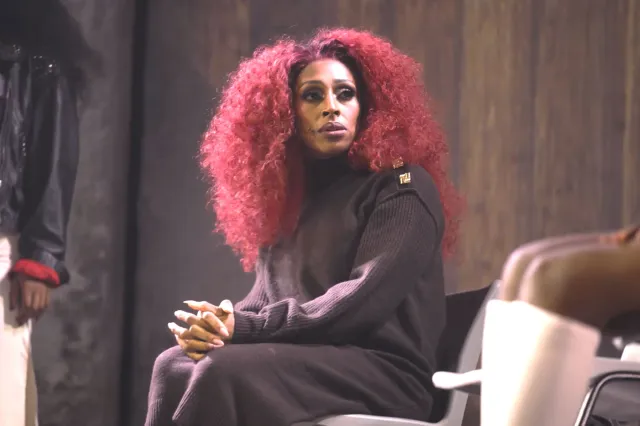
I’m Every Woman – The Chaka Khan Musical releases new trailer
Performances begin at Hackney Empire this week