Bacchae at the National Theatre – review
Indhu Rubasingham’s first production as director of the National plays on the Olivier stage until 1 November
 |
London
|
|
London
|
24 September 2025

The first production from every new director of the National Theatre is an event – a sign of which way the wind might blow. As Indhu Rubasingham unveiled Bacchae, most of her living predecessors were there: Richard Eyre (Bartholomew Fair), Trevor Nunn (An Enemy of the People), and Nicholas Hytner (Henry V), sitting discreetly in the stalls, cheering her on. (Rufus Norris – (Everyman) – was on holiday).
As a statement of intent, the production couldn’t be more bold. From the dazzling opening when a huge, ghostly horse drops through a lighted ring from the flies, to the direct challenge of a closing scene which asserts the power of theatre as a forum for debate in a messy world, it has confidence stamped all through it.
It hits odd snags along its winding path, but its energy and sheer spirit sweep doubts away. It’s like a blast of fresh air.
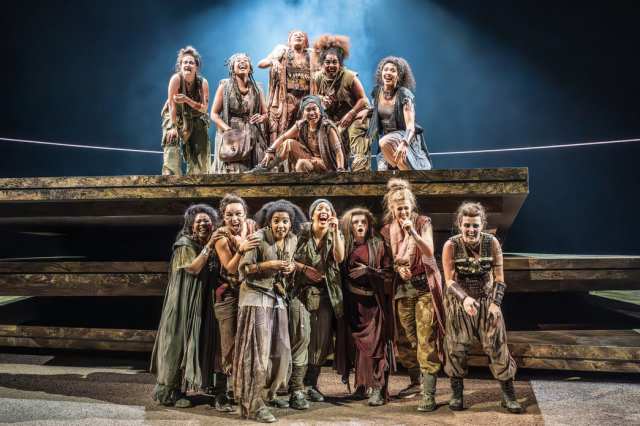
Its tone is set from the second Clare Perkins’ Vida, leader of the Bacchae, a group of marauding female freedom fighters, sashays onto the stage, sweeping off the actors who have been reacting with dramatic gestures and words to the arrival of the horse. “So melodramatic,” she says, wrapping the audience in her confidence. “Bigman relax with the theatrics!”
This is Euripides as filtered through the pen of Nima Taleghani, best known as an actor in Heartstopper, now bringing his debut play to the Olivier stage (the first time that has ever been done) with a fluent, colloquial script that plays with the nature of verse itself. It’s rude, rhyming, scatological and utterly gripping as it swoops and swerves through the complicated plot, and the even more knotty set of values that the play unfolds.
The Bacchae (all given character and swagger by a strong group of actors) provide the chorus as Dionysos (a lively Ukweli Roach), the god of theatre, wine and freedom, returns home to Thebes to try to make his family love him. He faces stiff opposition in the shape of his cousin Pentheus (James McArdle) an uptight dictator who has imposed strict laws, suppressing the rights of women.
Events unfold with remarkable pace on Robert Jones’ impressive set, which piles four square platforms on top of one another, spinning, rising and lowering them to create different dynamics within the space; Oliver Fenwick’s lighting rims them with bright borders and sets the action within cones of white light and circles of spotlights. When Agave (Sharon Small), Pentheus’s mother, begins to run wild, the red of her blood jags across the floor like a lightning flash.

Within this vibrant setting, Rubasingham marshals the action with absolute assurance. She’s brilliant at driving things forward, but also at creating tableaux that constantly focus the eye on the important thing. Kate Prince’s choreography sets the Bacchae powerful, propulsive dances, moving to DJ Walde’s score. Yet the production makes space for moments of quiet and intimacy too.
Taleghani conceives of Dionysos as the god of outsiders, of refugees and the dispossessed. Pentheus, who in McArdle’s staggeringly funny and clever performance has one moment when his hand gestures are reminiscent of a certain American president, is naturally unconvinced that these people need equal rights. The arguments go back and forth, but there is one scene where, just for a moment, he seems to be convinced that freedom and reconciliation are possible.
That moment of sudden tenderness and illumination works line by line and is magically realised, but it does also create problems, making Pentheus’ hideous fate even harder to take. But Taleghani has paved the ground when he lets blind Tireseus (a powerfully still Simon Startin) tell him early on that “we always have Choice before our Fate is decided.”
This is the moral of this very modern Bacchae: the sudden split in the Chorus between those seeking vengeance and those who recognise that revenge is never the answer makes the same point. But it’s the closing sequence, which asserts the capacity of theatre itself to grapple with these arguments, that feels like a gauntlet thrown down.
Yet the production also feels like a joyful beacon lit. As opening productions go, this one is a firecracker, full of life and promise. One thing Rubasingham’s time in charge of the National isn’t going to be, is boring.






Featured In This Story
Related Articles
See all


Latest Reviews
See all

Latest Videos
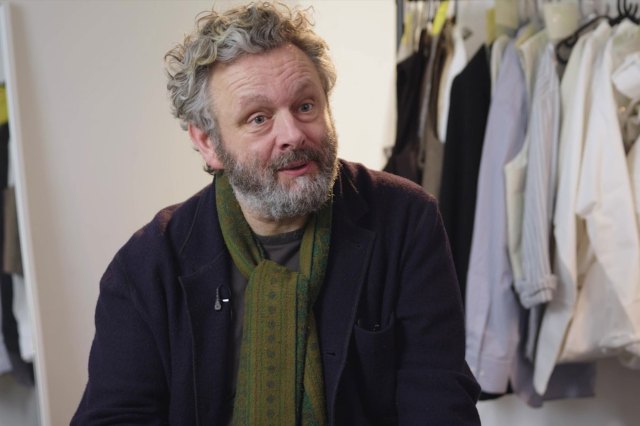
Michael Sheen on ‘building a community’ in Our Town for the Welsh National Theatre
Francesca Goodridge’s revival of Thornton Wilder’s Pulitzer Prize-winning play begins performances next month