
Lifeline musical at Southwark Playhouse Elephant – review
The London premiere, directed by Alex Howarth, runs until 2 May
 |
London
|
|
London
|
7 April 2026
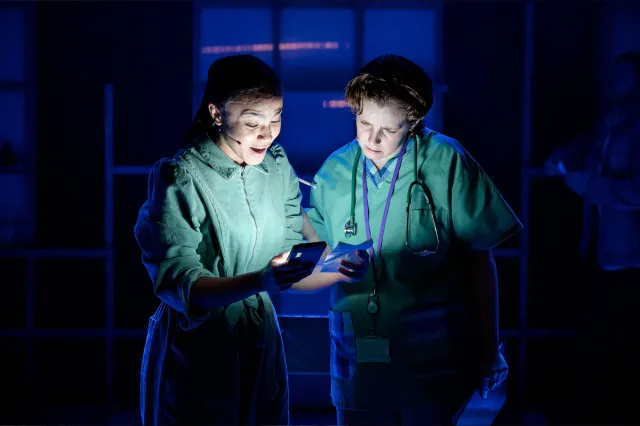
Antibiotics aren’t the most obvious subject matter for a musical, but no topic should be off limits if good writing and creativity are involved. Lifeline, presented by Scotland’s Charades Theatre Company, with music and lyrics by Robin Hiley and a book by Becky Hope-Palmer, has good intentions in abundance and the distinction of being the first musical to have been presented to the United Nations.
Unfortunately, however, the piece (previously staged at the Edinburgh Fringe and Off-Broadway) feels like a presentation about the wonders of antibiotics and their responsible use, with two jumbled stories included for human interest. The result is preachy, turgid and repetitive and exemplifies the fact that righteousness alone isn’t nearly sufficient to make good theatre.
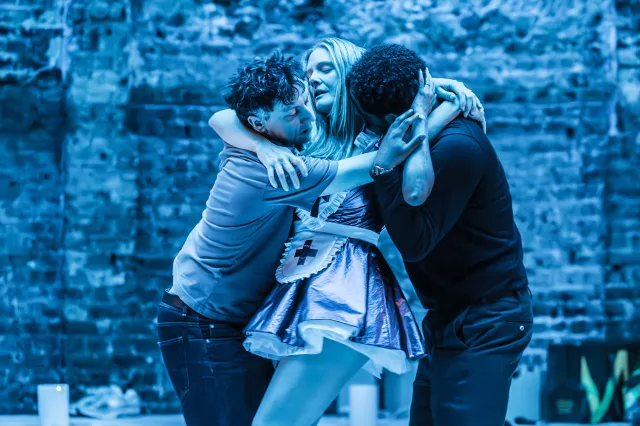
The show employs the dual stories of Alexander Fleming (Alan Vicary) in the 1950s following his great breakthrough and Nobel Prize for the discovery of penicillin (with flashbacks to earlier times), and Aaron (Nathan Salstone), a rock star who collapses on a world tour and sent to hospital back home in Scotland, where his estranged girlfriend Jess (Maz McGinlay) is a junior doctor in the paediatrics unit. The musical numbers, which are filled with rhymes like “mortality”/ “reality”, are undistinguished, and the book is interminably convoluted.
The dynamic between Vicary’s reserved Fleming and his Greek research assistant Amalia Koutsori, who would eventually become his late-in-life second wife, is slow-moving but rather sweet (he presents her with a locket containing the last of the original bacterial cultures as a token of his esteem). Greek-American performer Kelly Glyptis (a former Carlotta in The Phantom of the Opera) gives the evening’s standout performance as Amalia, with her assertive stage presence and powerful soprano voice, despite the underwritten nature of the character.
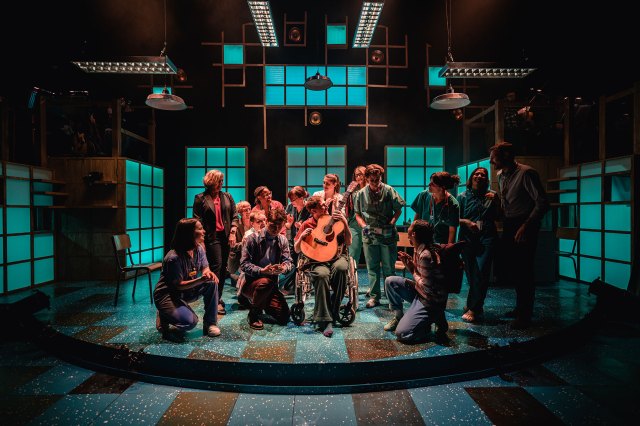
Much of the Fleming story in the second half takes place in a rambling World War I flashback (an excuse for military songs and wistful musings of the futility of war), where the young medic is unable to save his best friend on the battlefields. Towards the end, there are two interminable scenes in which Jess, who has quit her job, implores Aaron’s best friend Julian (Robbie Scott), a politician, to use his platform to do something about funding research into Antimicrobial Resistance (AMR), and then she visits Aaron’s mother Layla (Helen Logan), who is preparing to move house. The points that they’re trying to make get lost in the long-windedness and platitudes.
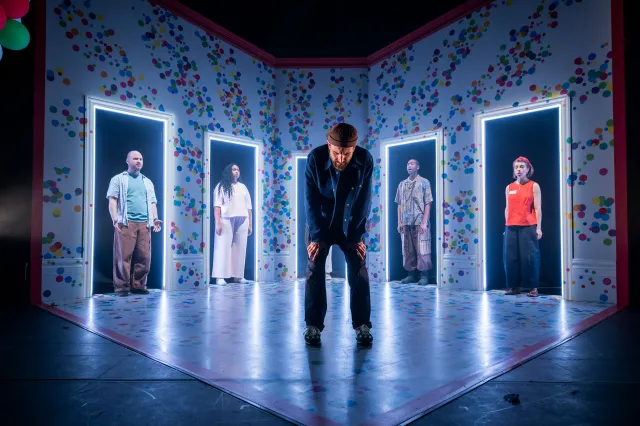
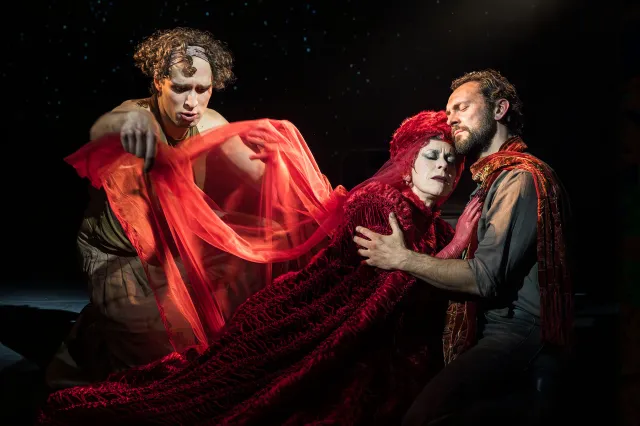
Alex Howarth’s direction has a static and juvenile feel with primary school-style choreography in the group numbers (and, in the scene with Julian, there’s choreography involving literal red tape). In terms of visual interest, Fleming and Amalia get smart new outfits for each of their scenes (costume design by Alice McNicholas), and Abby Clarke’s set design conveys the claustrophobia of being stuck in a lab or in a hospital.
Everybody in the show is practically without flaw and, after two-and-a-half hours of being preached at, each member of the community chorus of doctors, scientists and health workers introduces themselves and their work prior to the curtain call. Their work is invaluable and, of course, they deserve to be celebrated but, by this stage, I was close to developing a resistance to virtuousness.






Related Articles
See all

Latest Reviews
See all




Latest Videos
Rosamund Pike in Inter Alia – watch the West End opening night highlights
The National Theatre’s hit production follows in the footsteps of Prima Facie